Home Security System
Marie Van Brittan Brown invented the first home security system with a camera, monitor, two-way microphone, and remote-controlled door lock - the basis for modern home security.
View Teaching Bundle →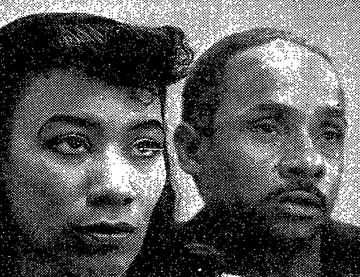
What Is the Home Security System?
Marie Van Brittan Brown invented the first home security system with a camera, monitor, two-way microphone, and remote-controlled door lock - the basis for modern home security.
Every time someone checks their phone to see who is at the front door, every time a camera scans the hallway of an apartment building, every time a video doorbell records a package delivery — they are using technology that traces directly back to an invention by Marie Van Brittan Brown. In 1966, she filed a patent for the first home security system: a camera, a monitor, a two-way microphone, a remote-controlled door lock, and an emergency alert button. She called it a closed-circuit television security system. We call it the foundation of modern home security. Marie was a nurse who worked long hours and often came home late at night. She lived in Jamaica, Queens, New York City — a neighborhood that had a high crime rate and frustratingly slow police response times. Her husband Albert was an electronics technician who also worked irregular hours, leaving Marie frequently home alone. She did not wait for someone else to solve her safety problem. She designed a solution herself. The system she and Albert engineered used a camera on a sliding motorized track that could look through peepholes at multiple heights — useful for seeing whether a visitor was an adult, a child, or someone crouching to avoid being seen. The camera fed a live image to a monitor in the bedroom, so Marie could see who was at the door without ever approaching it. A two-way microphone let her speak with visitors. A remote-controlled lock let her open or close the door from anywhere in the apartment. And a button connected directly to police or a security service, with no phone call required. Marie Van Brittan Brown and her husband Albert filed their patent on August 1, 1966, and it was granted on December 2, 1969 (U.S. Patent #3,482,037). Her invention has been cited in numerous subsequent security technology patents. The video doorbell at your neighbor's house, the CCTV cameras in your school hallway, the remote entry system at your apartment building — Marie Van Brittan Brown thought of those first. She died in 1999, but her ideas are alive in every security camera operating today.
Meet the Inventor: Marie Van Brittan Brown
Marie Van Brittan Brown was born in 1922 in Jamaica, Queens, New York City. She grew up in one of the five boroughs of New York and built her career as a nurse — a demanding profession that often required working night shifts and returning home in the early hours of the morning. Her neighborhood had significant crime and a police response time that made her feel unsafe, particularly when she was home alone. Her husband Albert Brown worked as an electronics technician with irregular hours, which meant the safety problem fell squarely on her shoulders. Rather than accepting the situation, Marie applied her mind to it. Working with Albert, whose electronics expertise was essential to the engineering, she designed a comprehensive home security system. The invention was conceptually hers — the problems she identified, the features she required, the user experience she designed — while Albert's technical knowledge of electronics helped translate that vision into working hardware. They filed the patent together on August 1, 1966, and U.S. Patent #3,482,037 was granted on December 2, 1969. Marie Van Brittan Brown received recognition from the National Scientists Committee for her invention, which was reported in the New York Times and covered by other publications. Her security system anticipated closed-circuit television surveillance, video doorbells, two-way audio communication, remote access control, and direct emergency alerting — technologies that would not become commercially widespread until decades after her patent. She lived long enough to see security cameras become common, though she did not live to see the smartphone-enabled video doorbell revolution that most directly fulfills her original vision. Marie Van Brittan Brown died in 1999 in Queens, New York, at age 76. Her patent endures, and so does the technology she imagined.
How It Works
Marie Van Brittan Brown's system was built around one central insight: you should be able to see, hear, and respond to who is at your door without ever opening it or going near it. She designed every component with that goal in mind. The camera was the heart of the system. Mounted on a motorized track, it could slide up and down to peer through peepholes at four different heights. This was important: an adult standing at normal height, a child, or someone crouching to avoid being seen would each appear at a different height. Multiple peepholes meant no one could hide by standing at an unusual height. The camera transmitted its image to a monitor — essentially a television screen — in the bedroom, where Marie could watch from a safe distance. A two-way microphone allowed her to speak with the person at the door and hear their response, just like a modern intercom. A remote-controlled door lock let her unlock and open the door from the bedroom if she chose to let someone in — or keep it locked if she did not. The final component was an emergency alert button: pressing it would immediately contact police or a private security guard without requiring a phone call, which in an emergency could make a critical difference in response time. Modern home security systems and video doorbells use the same fundamental architecture: a camera at the door, a display showing the feed, two-way audio, remote access control, and an emergency alert capability. The technology has advanced — cameras are now digital, feeds are transmitted over Wi-Fi to smartphones, and alerts use cellular networks — but the conceptual design is exactly what Marie Van Brittan Brown patented in 1966.
Timeline
Watch and Learn
Did You Know?
She Invented the Video Doorbell — In 1966
Products like the Ring video doorbell — which let you see, hear, and speak with a person at your front door from anywhere via your phone — are the direct commercial realization of what Marie Van Brittan Brown designed and patented in 1966. She had the idea 50 years before the product existed.
Her Patent Has Been Cited by Other Inventors
One measure of an invention's importance is how many later inventors cite it as prior art in their own patents. Marie Van Brittan Brown's patent has been referenced in numerous subsequent security technology filings, confirming that the industry itself recognizes her as the conceptual foundation of home security technology.
She Designed It For Herself
Brown was not an engineer hired to solve an abstract problem. She was a nurse who felt unsafe coming home alone late at night and could not get fast police help when she needed it. She designed her system to solve her own real problem — which is exactly why it worked so well and has lasted so long.
The Camera Had Four Peepholes at Different Heights
One of the cleverest features of Brown's design was the motorized camera that could slide to look through four peepholes at different heights. This meant a child, an adult, or someone deliberately crouching to hide could each be seen — no one could evade the camera by standing at an unusual height.
She and Her Husband Invented It Together
The patent lists both Marie Van Brittan Brown and her husband Albert Brown as co-inventors. Marie provided the concept, the design requirements, and the user vision. Albert, an electronics technician, contributed the technical expertise to make the electronics work. Their collaboration across professional domains — nursing and electronics — produced something neither could have created alone.
STEM Connection
Marie Van Brittan Brown's invention connects to some of the most exciting areas of modern STEM: electronics, computer science, and the fields of surveillance technology and smart home engineering. Her system was an early example of what engineers today call a 'closed-loop feedback system' — a setup where sensors (the camera and microphone) gather information, a processing unit (the monitor) displays it, and the user makes a decision and takes action (speaking through the microphone, unlocking the door, pressing the alert button). This loop — sense, process, decide, act — is the foundation of all modern smart devices. The camera-to-monitor connection in Brown's system was also a precursor to what we now call closed-circuit television, or CCTV. CCTV works by transmitting a camera signal over a closed circuit — meaning it goes only to authorized monitors, not to public airwaves. This is exactly what Brown designed: a private video feed from the door to the bedroom. Understanding how signals are transmitted, how images are captured and displayed, and how systems can be made secure and private is central to modern electrical engineering and computer science. Perhaps most powerfully, Brown's invention demonstrates the concept of user-centered design. She was the user — she felt unsafe coming home at night — and she designed a system based on her own lived experience. Her design worked because it was built around a real person's real needs, not a theoretical problem. Engineers today are taught to begin design projects by deeply understanding the people who will use their creations. Marie Van Brittan Brown did this instinctively, and the result was a patent that changed the history of security technology.
Related Inventions
Other Black inventions and innovations that changed the world.
Want to teach this invention? We've done the work for you.
Home Security System Complete Teaching Bundle
Lesson Plan
Comprehensive lesson plan covering the invention, the inventor, how it works, and its lasting impact on everyday life.
Student Workbook
Interactive workbook with reading passages, inventor biography, STEM activities, design challenges, and a quiz.
Flashcard Set
40 cards covering vocabulary, key facts, inventor details, how it works, and review challenges.
Instant digital download · Printable PDF · Grades 3–8 · STEM + History
Here's a peek inside...
📖 Lesson Plan
📝 Student Workbook
Read the passage about Marie Van Brittan Brown and the Home Security System, then answer the questions below.
🃏 Flashcard Set - Click to Flip!
Click the card to flip it
Get a Free Sample
Try before you buy! Enter your email to receive a free sampler with flashcards, activities, and a lesson plan excerpt. No spam, just history.