Howard University
Founded in 1867, Howard University became one of the most prestigious historically Black universities, educating leaders like Thurgood Marshall, Toni Morrison, and Kamala Harris.
View Teaching Bundle →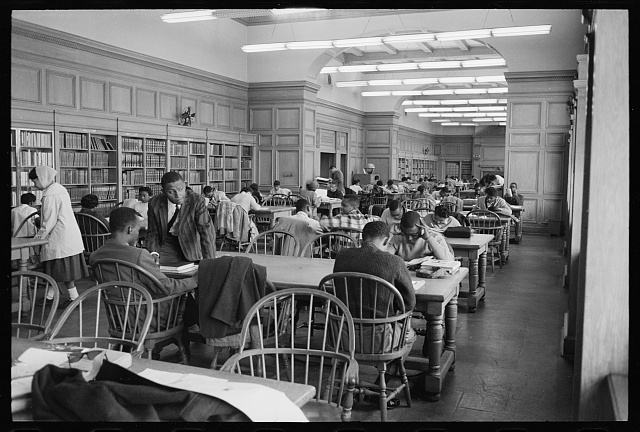
What Is Howard University?
Founded in 1867, Howard University became one of the most prestigious historically Black universities, educating leaders like Thurgood Marshall, Toni Morrison, and Kamala Harris.
In 1867, just two years after the end of the Civil War, a group of visionaries in Washington, D.C. founded a university with a radical idea: that Black Americans — and anyone else who had been denied a quality education — deserved access to the finest higher learning the country could offer. They named it Howard University, after General Oliver Howard, commissioner of the Freedmen's Bureau. What they built became something extraordinary. Howard University grew into one of the most respected universities in the world — not just among historically Black colleges and universities, but among all institutions of higher learning. Its students and graduates called it 'The Mecca,' a place of culture, intellectual power, and community that drew the best and brightest Black minds in America. The names of Howard's graduates read like a who's who of American achievement. Thurgood Marshall earned his law degree from Howard and went on to argue the landmark Brown v. Board of Education case before the Supreme Court — and later became the first Black Supreme Court Justice. Nobel Prize-winning novelist Toni Morrison earned her undergraduate degree here. Kamala Harris, who became the first Black and South Asian woman elected Vice President of the United States, graduated from Howard. Howard's law school was more than a law school — it became the training ground for the civil rights movement. The NAACP Legal Defense Fund drew heavily from Howard-trained attorneys who used the law as a weapon for justice. With about 10,000 students, professional schools in law, medicine, dentistry, pharmacy, and business, and the world-class Moorland-Spingarn Research Center, Howard University remains one of America's greatest institutions — a beacon of Black excellence that has shaped this nation's history.
Historical Significance
Howard University's significance extends far beyond its campus in Washington, D.C. Founded during Reconstruction to serve those who had been denied education under slavery, it became the intellectual home of Black America's most brilliant minds and most determined advocates. Howard's law school is perhaps its most historically consequential department. At a time when most law schools in America refused to admit Black students, Howard produced a generation of Black attorneys who used the legal system to dismantle segregation. The school's faculty and graduates were architects of the legal strategy that led to Brown v. Board of Education. The Moorland-Spingarn Research Center, housed at Howard, is one of the world's largest collections of materials documenting the history and culture of African and African American people — an irreplaceable archive that preserves the documentary record of the Black experience. Across medicine, education, law, arts, and public service, Howard graduates have shaped every sector of American life. The university's motto — 'Veritas et Utilitas' (Truth and Service) — captures its enduring commitment: not just to know the truth, but to use it in service to humanity.
Key Events at This Place
Watch and Learn
Did You Know?
The Mecca
Howard students and graduates call it 'The Mecca' — a place where Black culture, intellect, and excellence converge. The nickname reflects how central Howard has been to Black American identity and achievement.
The Law School That Ended Segregation
Howard Law School's dean Charles Hamilton Houston trained Thurgood Marshall and other attorneys who built the legal strategy that ended school segregation in Brown v. Board of Education in 1954.
An Archive Like No Other
The Moorland-Spingarn Research Center at Howard holds more than 175,000 books and one of the world's largest collections of materials on African and African American history — a treasure available to scholars everywhere.
A Stage for Stars
Howard's campus has hosted performances, readings, and lectures by some of the greatest figures in Black cultural life — from Langston Hughes to Dr. Martin Luther King Jr. to Barack Obama.
Founded During Reconstruction
Howard was founded in 1867 — just two years after the 13th Amendment abolished slavery. Its founding was part of the great Reconstruction-era effort to build institutions of opportunity for newly freed people.
Related Places
Other important places in Black history.
Want to teach this place? We've done the work for you.
Howard University Complete Teaching Bundle
Lesson Plan
Comprehensive lesson plan covering the location's history, significance, key events, and lasting impact.
Student Workbook
Interactive workbook with reading passages, geography activities, then-and-now comparisons, and a quiz.
Flashcard Set
40 cards covering vocabulary, key facts, geography, historical context, and review challenges.
Instant digital download · Printable PDF · Grades 4–8 · Verified accurate
Here's a peek inside...
📖 Lesson Plan
📝 Student Workbook
Read the passage about Howard University and answer the questions below.
🃏 Flashcard Set - Click to Flip!
Click the card to flip it
Get a Free Sample
Try before you buy! Enter your email to receive a free sampler with flashcards, activities, and a lesson plan excerpt. No spam, just history.