"What to the Slave Is the Fourth of July?"
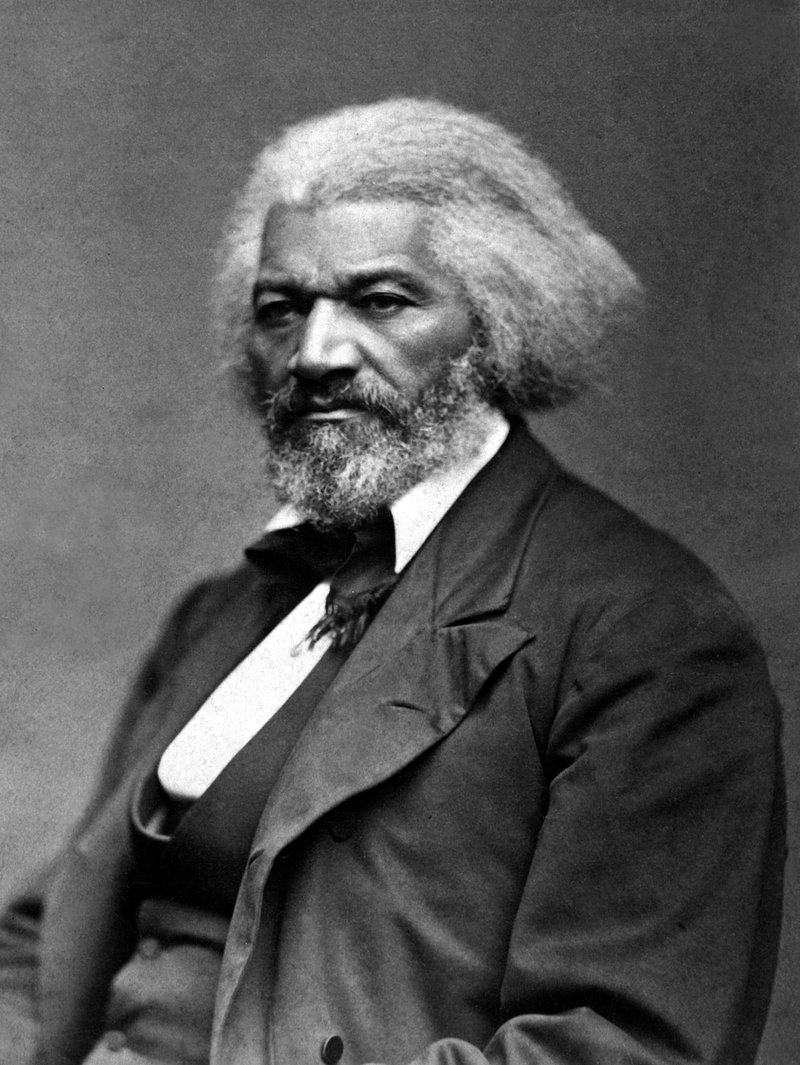
By Frederick Douglass
Frederick Douglass's searing speech exposing the hypocrisy of celebrating freedom in a nation that enslaved millions, delivered to a crowd in Rochester, New York.
View Teaching Bundle →
What Is the "What to the Slave Is the Fourth of July?"?
Frederick Douglass's searing speech exposing the hypocrisy of celebrating freedom in a nation that enslaved millions, delivered to a crowd in Rochester, New York.
On July 5, 1852 — note: July 5th, not the 4th — Frederick Douglass delivered what many historians consider one of the greatest speeches in American history. He was invited to speak to the Rochester Ladies' Anti-Slavery Society at Corinthian Hall in Rochester, New York, to celebrate the signing of the Declaration of Independence 76 years earlier. But Douglass did not simply celebrate. He began by praising the courage and vision of the Founding Fathers — then pivoted to deliver a devastating critique of American hypocrisy. The speech runs approximately 3,700 words and took approximately 60–90 minutes to deliver. Its central argument is simple and shattering: the Fourth of July, with all its celebrations of freedom and equality, means something entirely different to the enslaved people of America. 'This Fourth July is yours, not mine,' Douglass told his audience. 'You may rejoice, I must mourn.' He described slavery not as a distant problem or an abstract political debate but as a living, breathing reality — visible in every city, on every road, in the faces of men and women being marched in chains to auction. He also surprised his audience by expressing faith — fierce, determined faith — that slavery would end. He cited the laws of nature, the growing power of communication and transportation, and the fundamental contradiction between American ideals and American practice as forces that could not long coexist. The speech is a masterwork of American rhetoric — powerful, layered, and still profoundly relevant. It challenges every generation of Americans to measure the country's actions against its stated ideals.
Historical Context
By 1852, Frederick Douglass had been free for nearly fourteen years and was one of the most celebrated speakers in the United States and Europe. He had published his autobiography and founded The North Star, an antislavery newspaper. He was a man of enormous moral authority — and he was furious. The year 1852 came just two years after the Fugitive Slave Act, which had required all Americans — even those in free states — to assist in recapturing escaped enslaved people. The compromise that was supposed to ease tensions had instead poured fuel on the fire. Thousands of Black people in Northern cities lived in daily fear of being seized. The country was racing toward a confrontation it could not avoid. In this context, Douglass was invited to give what was expected to be a patriotic Fourth of July speech. He honored that invitation — and then he turned it into something else entirely. He asked his white audience to see July 4th through the eyes of someone for whom the words 'all men are created equal' were not a birthright but a taunt.
Key Excerpts
Important passages from this primary source, presented in kid-friendly language.
"This Fourth July is yours, not mine. You may rejoice, I must mourn."
What this means: This is the speech's central turning point. Douglass has praised the Founders — and now he separates himself from his audience. He does not share their celebration because the freedom being celebrated was not extended to people like him.
"What, to the American slave, is your 4th of July? I answer: a day that reveals to him, more than all other days in the year, the gross injustice and cruelty to which he is the constant victim."
What this means: This is the speech's most famous passage. Douglass answers his own question with painful directness. Independence Day, which shouts 'freedom,' only makes the contrast with slavery more unbearable for those still in chains.
"Standing with God and the crushed and bleeding slave on this occasion, I will, in the name of humanity which is outraged, in the name of liberty which is fettered, in the name of the constitution and the Bible, which are disregarded and trampled upon, dare to call in question and to denounce, with all the emphasis I can command, everything that serves to perpetuate slavery."
What this means: Douglass declares where he stands — with the enslaved, with God, with the Constitution's ideals and the Bible's morality. He is not asking politely. He is making a moral declaration that demands the audience choose a side.
"For it is not light that is needed, but fire; it is not the gentle shower, but thunder. We need the storm, the whirlwind, and the earthquake."
What this means: Douglass rejects gentleness as a tool for ending slavery. He argues that the moment demands passion, anger, and urgency — not quiet persuasion. This is one of the most memorable passages in the entire speech for its raw, elemental energy.
"At a time like this, scorching irony, not convincing argument, is needed. O! had I the ability, and could I reach the nation's ear, I would, to-day, pour out a fiery stream of biting ridicule, blasting reproach, withering sarcasm, and stern rebuke."
What this means: Douglass explains his rhetorical approach. He does not try to gently persuade — he uses irony, sarcasm, and rebuke because he believes the nation already knows that slavery is wrong and refuses to act on what it knows.
"Allow me to say, in conclusion, notwithstanding the dark picture I have this day presented of the state of the nation, I do not despair of this country. [...] There are forces in operation, which must inevitably work the downfall of slavery."
What this means: The speech does not end in despair. After his fierce critique, Douglass expresses real faith that slavery will end. Note: these two sentences appear in the same closing paragraph but are not directly consecutive — intervening text has been omitted, marked by the ellipsis. He cites the growth of communication, shared humanity, and the contradiction between American ideals and American practice as forces working toward justice.
Vocabulary Spotlight
Key words and phrases from this primary source.
Hypocrisy
The practice of claiming to believe something good while acting in a way that contradicts that belief
Irony
Saying or presenting the opposite of what you mean, often to make a point or expose a contradiction
Rhetoric
The art of using language effectively to persuade, inform, or move an audience
Denounce
To publicly declare something to be wrong or evil; to formally condemn
Perpetuate
To cause something to continue indefinitely; to keep something going
Sarcasm
Sharp, cutting remarks meant to mock or criticize, often by saying the opposite of what you mean
Rebuke
A sharp, stern criticism or reprimand; strongly telling someone they have done something wrong
Abolitionist
A person who believed slavery should be completely and immediately ended
About the Author
Learn more about the person who created this primary source.
Impact & Legacy
Watch and Learn
Did You Know?
He Spoke on July 5th, Not July 4th
Douglass deliberately chose July 5th for his speech. Speaking on the 4th would have implied he shared in the celebration. By speaking the day after, he signaled immediately that his relationship to the holiday was different.
The Speech Was Approximately 3,700 Words — and Took About an Hour
Today we consider 10 minutes a long speech. Douglass's speech ran approximately 3,700 words — delivered over roughly 60–90 minutes at the deliberate pace of 19th-century oratory. Audiences in the 1800s expected speeches to be long, detailed, and powerful. This one was all three.
He Praised the Founders Before Criticizing the Nation
Douglass did not attack the Founding Fathers. He praised their courage and called them great men. Then he used their own words — 'all men are created equal' — to condemn a nation that denied those words' meaning.
The Speech Ends With Hope, Not Despair
Many people remember the speech for its fierce critique — but it ends with Douglass expressing real faith that slavery will end. He believed American ideals, human nature, and the forces of history were on the side of freedom.
It Is Considered One of the Greatest American Speeches
Historians and literary scholars regularly rank 'What to the Slave Is the Fourth of July?' among the finest American speeches ever delivered — alongside the Gettysburg Address and the 'I Have a Dream' speech.
Douglass Was Self-Educated
The man who delivered one of the most intellectually sophisticated speeches in American history taught himself to read in secret, at risk of severe punishment. His eloquence is also a testament to what human potential can achieve under the worst conditions.
Related Primary Sources
Other important documents and speeches in Black history.
Want to teach this primary source? We've done the work for you.
"What to the Slave Is the Fourth of July?" Complete Teaching Bundle
Lesson Plan
Comprehensive lesson plan covering the document's background, key passages, author's purpose, and historical impact.
Student Workbook
Interactive workbook with source analysis exercises, reading comprehension, vocabulary in context, and compare & contrast activities.
Flashcard Set
40 cards covering vocabulary, key excerpts, historical context, author's purpose, and review challenges.
Instant digital download · Printable PDF · Grades 4–8 · Verified accurate
Here's a peek inside...
📖 Lesson Plan
📝 Student Workbook
Read the excerpt from "What to the Slave Is the Fourth of July?" and answer the questions below.
🃏 Flashcard Set - Click to Flip!
Click the card to flip it
Get a Free Sample
Try before you buy! Enter your email to receive a free sampler with flashcards, activities, and a lesson plan excerpt. No spam, just history.