Carbon Filament for the Light Bulb
Lewis Latimer invented the carbon filament that made electric light bulbs practical and long-lasting, and helped draft the patent for Alexander Graham Bell's telephone.
View Teaching Bundle →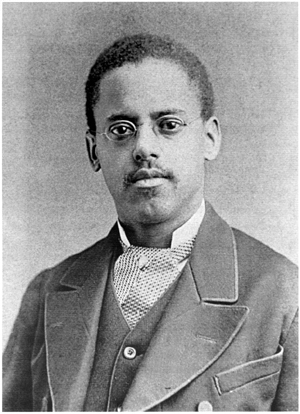
What Is the Carbon Filament for the Light Bulb?
Lewis Latimer invented the carbon filament that made electric light bulbs practical and long-lasting, and helped draft the patent for Alexander Graham Bell's telephone.
When we think of the light bulb, we think of Thomas Edison. But here is the part of the story that most history books leave out: without Lewis Latimer, Edison's light bulb would have remained an expensive, short-lived curiosity that most people could never afford. The early light bulbs that Edison's team developed used a platinum filament — the tiny wire inside the bulb that glows when electricity flows through it. Platinum filaments worked, but they burned out in just a few hours and cost more than a dollar each at a time when most workers earned only a few dollars a week. Electric light was a luxury only the very wealthy could enjoy. Lewis Latimer changed all of that. Born in 1848 in Chelsea, Massachusetts, Latimer was the son of George Latimer, a formerly enslaved man whose escape from slavery became a famous legal case. Lewis was largely self-taught, learning mechanical drawing and drafting by studying books in the offices where he worked. His skill was so extraordinary that he was asked to draw the patent diagrams for Alexander Graham Bell's telephone in 1876. In 1882, Latimer received a patent for a process for manufacturing a carbon filament — a wire made from a specially treated thread of carbon — that lasted for months instead of hours. His breakthrough was not simply the idea of a carbon filament, but a reliable, repeatable manufacturing method that made carbon filaments durable and cheap to produce at scale. He developed this innovation while working for Hiram Maxim's U.S. Electric Lighting Company, a direct competitor of Thomas Edison. His carbon filament was also far cheaper to produce than platinum, bringing the cost of light bulbs within reach of ordinary families. Latimer later joined Thomas Edison's team as a member of the elite Edison Pioneers, helping to install and manage electrical lighting systems in cities across the United States and Europe. He also wrote the first textbook on electrical lighting. The world-changing technology we call electric light reached the world through Lewis Latimer's hands.
Meet the Inventor: Lewis Latimer
Lewis Howard Latimer was born on September 4, 1848, in Chelsea, Massachusetts. His parents, George and Rebecca Latimer, had escaped slavery in Virginia in 1842. George Latimer's arrest and the ensuing legal battle became a famous antislavery cause, with Frederick Douglass among those who advocated for his freedom. The family eventually purchased George's freedom, and Lewis was born free. Latimer's early life was marked by hardship. His father abandoned the family when Lewis was ten, and Lewis worked a series of jobs to help support his mother and siblings. At sixteen, he lied about his age to enlist in the Union Navy during the Civil War. After the war, he found work as an office boy at a Boston patent law firm, where he taught himself mechanical drawing and drafting by studying the tools and books around him. His self-taught skill was so impressive that the firm promoted him to draftsman. In 1876, he was hired to draw the patent diagrams for Alexander Graham Bell's telephone — a landmark assignment. He later joined Hiram Maxim's United States Electric Lighting Company — one of Thomas Edison's chief competitors — where he made his carbon filament breakthrough. On January 17, 1882, he and co-inventor Joseph V. Nichols were granted U.S. Patent No. 252,386 for their 'Process of Manufacturing Carbons,' a method that produced carbon filaments that were durable, consistent, and far cheaper than platinum. Latimer joined Edison's team in 1884 and worked with him for decades. He was one of the original Edison Pioneers — the small group of elite inventors and engineers who worked directly with Edison — and the only Black member of that group. He also wrote Incandescent Electric Lighting: A Practical Description of the Edison System, the first major textbook on the subject, in 1890. Latimer died on December 11, 1928, in Flushing, New York, at age 80.
How It Works
A light bulb works by passing electricity through a very thin wire called a filament. The filament resists the electric current, and that resistance generates heat and light — a process called incandescence. The key challenge is making a filament that can withstand the extreme heat without breaking down. Edison's early platinum filaments worked but burned out quickly and were very expensive. Latimer solved this by treating a thin thread of cotton or bamboo with carbon — essentially baking the fiber in a controlled environment until it turned into a durable carbon wire. Carbon can withstand much higher temperatures than platinum while remaining electrically resistant. Latimer's key innovation was perfecting the manufacturing process so the carbon filament was uniform and reliable — not just a laboratory curiosity but something that could be manufactured the same way every time. Latimer also invented a better enclosure for the filament inside the bulb, improving how long the vacuum was maintained — which is essential because oxygen destroys a hot filament rapidly.
Timeline
Watch and Learn
Did You Know?
His Father's Escape Was Front-Page News
When Lewis's father George escaped slavery and was arrested in Boston in 1842, the case became a national sensation. Frederick Douglass wrote about it. Abolitionists raised money to purchase George's freedom. Lewis was born into a family whose fight for freedom had already made history.
Self-Taught at a Patent Law Firm
Latimer started as an office boy, sweeping floors and running errands at a Boston patent firm. He secretly studied the drafting tools around him after hours, taught himself mechanical drawing, and eventually convinced the firm to promote him to draftsman.
He Drew the Plans for the Telephone
Before Alexander Graham Bell could file his telephone patent in 1876, he needed professional patent drawings. He hired Lewis Latimer to draw them — making Latimer an invisible but essential part of one of the most famous patents in history.
Edison's Bulbs Cost More Than a Day's Wages
Before Latimer's carbon filament, platinum-filament bulbs cost more than $1 each — more than many workers earned in a day. Latimer's manufacturing process drove the cost down dramatically, putting electric light within reach of ordinary American families.
He Wrote the Book on Electric Light
Latimer's 1890 textbook, Incandescent Electric Lighting, was the first major guide to electric lighting systems. Engineers and electricians across the country used it to learn how to install and maintain the new technology that was transforming cities.
STEM Connection
Lewis Latimer's work connects directly to physics, chemistry, and materials science — fields students begin exploring in middle school. In physics, the light bulb demonstrates electrical resistance and the conversion of electrical energy to light and heat energy. The thinner and more resistant the filament, the more light it produces — up to the point where it breaks down from the heat. In chemistry, Latimer's carbon filament process was an early example of materials engineering: deliberately changing the structure of a material (cotton or bamboo fiber → carbon) through a controlled chemical process (pyrolysis — heating without oxygen) to produce a material with specific desired properties. In materials science, Latimer's insight connects to how engineers today design everything from computer chips to aerospace materials: the right material, processed in the right way, can make the difference between something that fails in hours and something that lasts for months or years. That principle drives engineering innovation to this day.
Related Inventions
Other Black inventions and innovations that changed the world.
Want to teach this invention? We've done the work for you.
Carbon Filament for the Light Bulb Complete Teaching Bundle
Lesson Plan
Comprehensive lesson plan covering the invention, the inventor, how it works, and its lasting impact on everyday life.
Student Workbook
Interactive workbook with reading passages, inventor biography, STEM activities, design challenges, and a quiz.
Flashcard Set
40 cards covering vocabulary, key facts, inventor details, how it works, and review challenges.
Instant digital download · Printable PDF · Grades 3–8 · STEM + History
Here's a peek inside...
📖 Lesson Plan
📝 Student Workbook
Read the passage about Lewis Latimer and the Carbon Filament for the Light Bulb, then answer the questions below.
🃏 Flashcard Set - Click to Flip!
Click the card to flip it
Get a Free Sample
Try before you buy! Enter your email to receive a free sampler with flashcards, activities, and a lesson plan excerpt. No spam, just history.