Open-Heart Surgery
Dr. Daniel Hale Williams performed one of the first successful open-heart surgeries in history, saving a stabbing victim by repairing the pericardium around his heart.
View Teaching Bundle →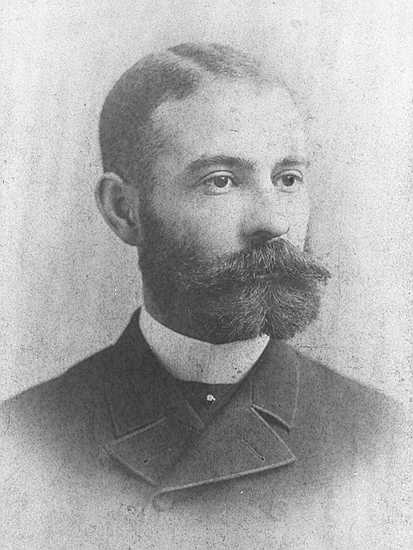
What Is the Open-Heart Surgery?
Dr. Daniel Hale Williams performed one of the first successful open-heart surgeries in history, saving a stabbing victim by repairing the pericardium around his heart.
On the night of July 9, 1893, a young man named James Cornish was brought to Provident Hospital in Chicago with a knife wound to his chest. The blade had come dangerously close to his heart. Every surgeon of that era knew the same thing: wounds this close to the heart were considered nearly impossible to treat. The heart was thought to be off-limits — too delicate, too vital, too dangerous to approach. But Dr. Daniel Hale Williams was not a surgeon who accepted the impossible. On July 9, 1893, he opened James Cornish's chest, examined the damage, and carefully sutured — stitched — the pericardium, the tough protective sac surrounding the heart. He worked without anesthesia machines as we know them today, without antibiotics, without modern surgical tools. He worked by gaslight. And when it was over, James Cornish was alive. Cornish not only survived the surgery — he lived for approximately 20 more years. Dr. Williams had performed one of the earliest successful surgeries involving the structures around the human heart. Historians debate exactly how to describe what Williams accomplished. He sutured the pericardium — the sac that protects the heart — not the heart muscle itself. A St. Louis surgeon named Henry Dalton had performed a similar pericardial repair two years earlier, in 1891. Some historians give Dalton credit for the first successful pericardial repair; others emphasize Williams's surgery as the more widely documented and influential case. What is not disputed is that Williams's surgery was a landmark moment: he proved that the chest cavity could be opened safely and that injuries close to the heart could be treated surgically. That proof changed medicine. This achievement was remarkable not just for what Dr. Williams did in that operating room, but for where he did it. Provident Hospital was a hospital he had founded himself in 1891, just two years before the surgery. It was the first non-segregated hospital in the United States — a place where Black doctors could train and Black patients could receive first-class care. Dr. Williams also established one of the first nursing schools for Black women in the country. He believed that excellence in medicine must be accessible to everyone, regardless of race. In every way, he built the future of American medicine.
Meet the Inventor: Daniel Hale Williams
Daniel Hale Williams was born on January 18, 1856, in Hollidaysburg, Pennsylvania, the fifth of seven children in a mixed-heritage family. His father died when Daniel was eleven, scattering the family and forcing the young boy to fend for himself at an early age. He worked as a shoemaker's apprentice and then as a barber before a chance encounter with a prominent physician, Dr. Henry Palmer, inspired him to pursue medicine. Williams apprenticed under Dr. Palmer and then enrolled at Chicago Medical College (later Northwestern University Medical School), graduating in 1883. He set up practice in Chicago, where his skill quickly earned him an outstanding reputation. But Williams saw a deeper problem: Black patients were turned away from white hospitals, and Black doctors had no hospital where they could train and practice. In 1891, Williams founded Provident Hospital and Training School in Chicago — the first interracial hospital in the United States and one of the first nursing schools open to Black women. Two years later, he performed his landmark pericardial surgery there. President Grover Cleveland later appointed Williams as chief surgeon of Freedmen's Hospital in Washington, D.C. In 1913, when the American College of Surgeons was founded, Williams became one of its founding members — and the first Black physician to be included in that founding group. He died on August 4, 1931, in Idlewild, Michigan, his legacy woven into the fabric of American medicine.
How It Works
The heart is protected by the pericardium — a tough, fibrous sac filled with a small amount of fluid that cushions the heart and helps it move freely as it beats. When James Cornish was stabbed, the knife narrowly missed the heart itself but cut into the pericardium. Dr. Williams opened the chest cavity — the ribcage — to reach the injury. He could then directly examine the heart and its surrounding tissue. He carefully sutured (stitched closed) the tear in the pericardium without touching the heart muscle itself. By closing the wound, he stopped bleeding, prevented infection from reaching the heart, and restored the protective environment around it. It is important to understand what Williams did and did not do: he repaired the pericardium, the protective sac, not the heart itself. Modern open-heart surgery — where the heart is stopped and directly operated on — would come decades later. But Williams proved that the chest could be opened and injuries near the heart could be treated, which was a necessary first step toward everything that followed. In modern surgery, surgeons use machines to take over heart and lung function during operations. In 1893, Williams had none of that. He relied entirely on speed, precision, and skill — working quickly to minimize the time the chest was open. His success proved that the human heart, while delicate, could be approached surgically.
Timeline
Watch and Learn
Did You Know?
James Cornish Lived About 20 More Years
The patient from Williams's landmark 1893 surgery, James Cornish, survived and lived for approximately 20 more years after the operation that everyone said was impossible. He was living proof that Williams had truly succeeded.
Surgery by Gaslight
Williams performed the 1893 surgery using gaslight — there was no reliable electric lighting in operating rooms yet. He worked in conditions far more primitive than any modern surgeon can imagine.
No Antibiotics
Antibiotics were not discovered until 1928 — 35 years after Williams's surgery. He had to prevent infection through meticulous technique alone. That Cornish survived without antibiotics makes the achievement even more remarkable.
A Hospital Built for Equality
Williams founded Provident Hospital in 1891 specifically because Black doctors had no hospital where they could train and Black patients had no hospital where they could receive high-quality care without discrimination.
A Mixed-Heritage Pioneer
Williams was of mixed African, European, and Native American heritage, and he identified strongly with the Black community throughout his life, dedicating his career to breaking down racial barriers in American medicine.
STEM Connection
Dr. Williams's surgery connects to biology, anatomy, and the engineering of medical procedures in ways that students study throughout their science education. In anatomy, the heart's structure — four chambers, the surrounding pericardium, the major blood vessels entering and leaving — determines what surgeons can and cannot do. Understanding the exact anatomy of the chest was essential to Williams's success. In biology, wound repair and infection prevention are core concepts. Williams operated in an era before antibiotics, meaning every decision about how to handle tissue, minimize exposure, and close the wound cleanly determined whether the patient lived or died. In medical engineering, Williams's surgery was a milestone in understanding what was possible. Every major surgical advance builds on the knowledge that the previous generation of surgeons proved. Williams showed the medical world that the chest cavity could be safely opened and the heart's environment could be repaired — knowledge that eventually led to full open-heart surgery, bypass operations, and heart transplants.
Related Inventions
Other Black inventions and innovations that changed the world.
1940 · Charles Drew
Blood Bank
Dr. Charles Drew pioneered methods for processing and storing blood plasma, creating the first large-scale blood bank that saved countless lives during World War II and beyond.
1988 · Patricia Bath
Cataract Laserphaco Probe
Dr. Patricia Bath invented the Laserphaco Probe for cataract surgery, becoming the first African American woman doctor to receive a medical patent and restoring sight to people worldwide.
Want to teach this invention? We've done the work for you.
Open-Heart Surgery Complete Teaching Bundle
Lesson Plan
Comprehensive lesson plan covering the invention, the inventor, how it works, and its lasting impact on everyday life.
Student Workbook
Interactive workbook with reading passages, inventor biography, STEM activities, design challenges, and a quiz.
Flashcard Set
40 cards covering vocabulary, key facts, inventor details, how it works, and review challenges.
Instant digital download · Printable PDF · Grades 3–8 · STEM + History
Here's a peek inside...
📖 Lesson Plan
📝 Student Workbook
Read the passage about Daniel Hale Williams and the Open-Heart Surgery, then answer the questions below.
🃏 Flashcard Set - Click to Flip!
Click the card to flip it
Get a Free Sample
Try before you buy! Enter your email to receive a free sampler with flashcards, activities, and a lesson plan excerpt. No spam, just history.