Refrigerated Truck
Frederick McKinley Jones invented the first practical automatic refrigeration system for trucks, transforming the food industry and making fresh food available across the country.
View Teaching Bundle →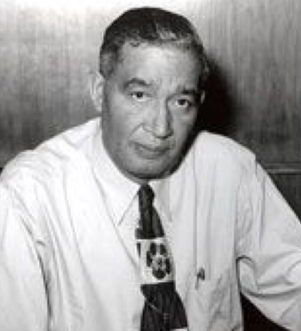
What Is the Refrigerated Truck?
Frederick McKinley Jones invented the first practical automatic refrigeration system for trucks, transforming the food industry and making fresh food available across the country.
Think about the last time you drank cold milk, ate fresh vegetables from across the country, or had ice cream that had traveled hundreds of miles to your grocery store. All of that is possible because of a self-taught inventor from Kentucky named Frederick McKinley Jones. Before Jones's invention, keeping food cold during long-distance transport was one of the great unsolved problems of modern life. Trucks packed with ice worked for short trips, but ice melted. Refrigerated railcars existed, but they needed constant attention, couldn't handle rough roads, and were dependent on the rail network. There was no reliable way to move perishable food — meat, dairy, fruits, vegetables — long distances in a truck without spoilage. Families in one region could not easily access fresh food grown in another. Frederick McKinley Jones changed all of that. Born in 1893 in Covington, Kentucky, Jones left school at age 11 and taught himself mechanics by working as an auto mechanic, a race car builder, and an engineer. By the time he was in his forties, he had become one of the most brilliant self-taught engineers in America. In 1940, Jones filed the patent application for the first practical automatic refrigeration system for trucks (U.S. Patent #2,303,857, granted 1942). Unlike earlier attempts, his system was compact enough to mount on the front of a truck, rugged enough to handle rough roads, and automatic enough to operate without constant human attention. He co-founded Thermo King Corporation with businessman Joseph Numero, and the company's refrigerated transport systems changed the world. During World War II, Jones's technology refrigerated food and blood supplies for the military — saving soldiers' lives. Today, the refrigerated truck is the backbone of the modern global food supply chain. Jones held over 60 patents in his lifetime and was the first Black American elected to the American Society of Refrigeration Engineers.
Meet the Inventor: Frederick McKinley Jones
Frederick McKinley Jones was born on May 17, 1893, in Covington, Kentucky. His mother died when he was very young, and his father largely disappeared from his life. Raised in difficult circumstances, Jones left school around age 11 and found work doing whatever mechanical jobs he could find. He had an exceptional natural gift for understanding how machines worked. Jones taught himself to be an auto mechanic, and his skill was so great that he eventually began building and racing cars himself. He served in World War I as an Army mechanic, where his expertise with engines and electrical systems grew further. After the war, he worked in Hallock, Minnesota, where he built a radio transmitter for a local hospital and designed a box office system for the local movie theater — showing the breadth of his self-taught engineering ability. His meeting with businessman Joseph Numero changed the course of his career. Numero saw Jones's genius and partnered with him to solve the problem of refrigerating trucks. Together they co-founded Thermo King Corporation, which became the world's leading manufacturer of transport refrigeration systems. Jones held over 60 patents — in refrigeration, movie projection, portable X-ray equipment, and more. He was the first Black American elected to the American Society of Refrigeration Engineers. In 1991, President George H.W. Bush posthumously awarded Jones both the National Medal of Technology — the highest honor for technological achievement in the United States — and the Presidential Medal of Freedom, the nation's highest civilian honor. Jones died on February 21, 1961, in Minneapolis, Minnesota, at age 67.
How It Works
Refrigeration works by moving heat from inside a cold space to outside it — the opposite of what most people expect. The refrigerant inside the system absorbs heat from the cargo area (making it cold) and then releases that heat into the outside air. Jones's key challenge was engineering a refrigeration unit that was: (1) compact enough to fit on the front of a truck, (2) rugged enough to handle road vibrations without breaking down, (3) automatic enough to maintain a set temperature without constant human adjustment, and (4) powerful enough to cool a large cargo area. His design used a motor-driven compressor to compress refrigerant gas, causing it to release heat outside the truck. The compressed gas then expanded inside the cargo area, absorbing heat and cooling the space. A thermostat monitored the internal temperature and activated or deactivated the compressor to maintain the target temperature automatically. The innovation was not any single new component but the engineering of all these elements into a reliable, compact, road-ready system — the kind of integrated engineering challenge that separates a great invention from a good idea.
Timeline
Watch and Learn
Did You Know?
Jones Left School at Age 11
Jones had almost no formal education — he left school around age 11 due to his difficult home circumstances. Everything he knew about engineering, he taught himself through working, observing, and experimenting.
He Held Over 60 Patents
Jones did not just invent refrigerated trucks — he held over 60 patents covering refrigeration systems, movie projection equipment, portable X-ray machines, and more. He was one of the most productive inventors of his era.
His Technology Saved WWII Soldiers' Lives
During World War II, Jones's refrigeration units were used to keep food and blood plasma cold for soldiers in the field. The ability to ship refrigerated blood plasma to combat zones directly saved soldiers who would have died without transfusions.
Jones Built a Radio Transmitter From Scratch
To demonstrate his engineering versatility, Jones once built a working radio transmitter for a hospital in rural Minnesota — from scratch, with no formal training in radio engineering.
Thermo King Is Still a Leading Company Today
The company Jones co-founded — Thermo King (now part of Trane Technologies) — is still one of the world's leading manufacturers of transport refrigeration systems, more than 80 years after its founding. Jones's legacy is built into every refrigerated truck on the road.
STEM Connection
Frederick Jones's refrigerated truck connects to thermodynamics, mechanical engineering, and food science in ways that span several years of STEM education. In physics and thermodynamics, refrigeration demonstrates the laws of heat transfer: heat always moves from warmer areas to cooler ones. A refrigerator doesn't 'make cold' — it removes heat. The compressor-expansion cycle is a direct application of the gas laws students learn in chemistry and physics. In mechanical engineering, Jones's challenge was designing components that could withstand the continuous vibration, temperature changes, and mechanical stress of long-haul truck travel — a far more demanding environment than a stationary kitchen refrigerator. In food science and public health, refrigerated transport transformed nutrition. Before Jones, people in northern states might go months without fresh fruits and vegetables in winter. After Jones, fresh food from any region could reach any other region year-round — changing diets, reducing food-borne illness, and making nutritious food more widely available.
Related Inventions
Other Black inventions and innovations that changed the world.
Want to teach this invention? We've done the work for you.
Refrigerated Truck Complete Teaching Bundle
Lesson Plan
Comprehensive lesson plan covering the invention, the inventor, how it works, and its lasting impact on everyday life.
Student Workbook
Interactive workbook with reading passages, inventor biography, STEM activities, design challenges, and a quiz.
Flashcard Set
40 cards covering vocabulary, key facts, inventor details, how it works, and review challenges.
Instant digital download · Printable PDF · Grades 3–8 · STEM + History
Here's a peek inside...
📖 Lesson Plan
📝 Student Workbook
Read the passage about Frederick McKinley Jones and the Refrigerated Truck, then answer the questions below.
🃏 Flashcard Set - Click to Flip!
Click the card to flip it
Get a Free Sample
Try before you buy! Enter your email to receive a free sampler with flashcards, activities, and a lesson plan excerpt. No spam, just history.