Black Lives Matter
A global movement founded by Alicia Garza, Patrisse Cullors, and Opal Tometi in response to racial violence, advocating for an end to systemic racism and police brutality against Black people.
View Teaching Bundle →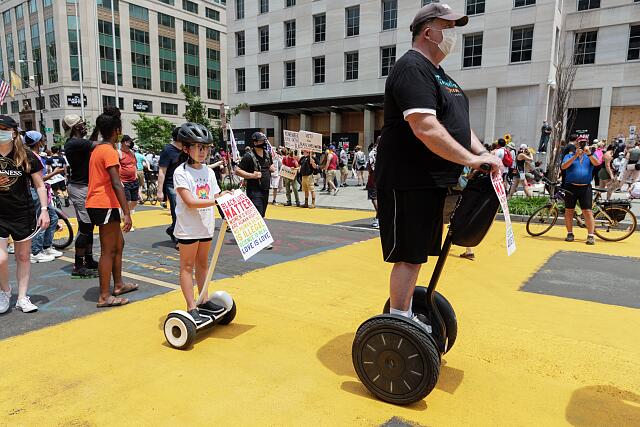
What Was the Black Lives Matter?
A global movement founded by Alicia Garza, Patrisse Cullors, and Opal Tometi in response to racial violence, advocating for an end to systemic racism and police brutality against Black people.
Black Lives Matter (BLM) is a social movement and organization that emerged in the United States in 2013. It was founded by Alicia Garza, Patrisse Cullors, and Opal Tometi, three Black women who began using the phrase #BlackLivesMatter as an expression of grief, solidarity, and affirmation following the acquittal of George Zimmerman in the death of Trayvon Martin, a 17-year-old Black teenager from Florida. What began as a hashtag on social media grew into a formal organization and then into a broad global movement. The phrase 'Black Lives Matter' carries a clear and historically rooted meaning: it is an affirmation that the lives of Black people have value and deserve protection — a declaration that has been contested throughout African American history from slavery through the present. The movement grew significantly in 2014 following highly publicized deaths of Black Americans including Michael Brown in Ferguson, Missouri, and Eric Garner in New York. It expanded dramatically in 2020, following the death of George Floyd in Minneapolis, Minnesota. Protests spread across the United States and into many countries around the world. Scholars and journalists estimated that 15 to 26 million people participated in U.S. protests in the summer of 2020 — among the largest protest events in American history. BLM chapters have been established in cities across the United States and internationally. The movement operates within a long tradition of African American advocacy for civil rights and equal protection under the law, and it has sparked national and international conversations about policing, racial equity, and the ongoing meaning of justice in American society.
Founding Story
On July 13, 2013, a Florida jury acquitted George Zimmerman in the death of Trayvon Martin. Trayvon was a 17-year-old Black teenager who had been shot and killed in February 2012 while walking in a gated community in Sanford, Florida. Zimmerman, a neighborhood watch volunteer, had followed Trayvon despite being told by a 911 dispatcher that this was not necessary. The acquittal was received by many Black Americans with profound sorrow and anger. That night, Alicia Garza wrote what she later called a 'love letter to Black people' on Facebook — a post that ended with the phrase 'Black lives matter.' Her friend and fellow activist Patrisse Cullors shared it with the hashtag #BlackLivesMatter. Opal Tometi helped build the digital infrastructure that allowed the hashtag to spread. The three women — all experienced community organizers — had not planned a movement in that moment. They were expressing grief. But the phrase resonated because it named something that many Black Americans had felt for a long time: that their lives were not being treated as though they mattered, by systems and by history. Within months, the hashtag had spread across social media. In 2014, protests in Ferguson, Missouri, and other cities put #BlackLivesMatter on the front pages of newspapers worldwide. What had begun as an expression of grief became a movement.
Watch and Learn
Related Organizations
Other organizations and movements connected to this story.
1909–Present
NAACP
The National Association for the Advancement of Colored People, founded to fight racial inequality through legal action, education, and advocacy, becoming the most influential civil rights organization in American history.
1971–Present
Congressional Black Caucus
A caucus of Black members of the United States Congress dedicated to advancing legislative priorities affecting African Americans and other marginalized communities.
Want to teach this organization? We've done the work for you.
Black Lives Matter Complete Teaching Bundle
Lesson Plan
Comprehensive lesson plan covering the organization's founding, mission, key leaders, and lasting impact.
Student Workbook
Interactive workbook with reading passages, timeline activities, leadership analysis, and a quiz.
Flashcard Set
40 cards covering vocabulary, key facts, leaders, achievements, and review challenges.
Instant digital download · Printable PDF · Grades 4–8 · Verified accurate
Here's a peek inside...
📖 Lesson Plan
📝 Student Workbook
Read the passage about the Black Lives Matter and answer the questions below.
Get a Free Sample
Try before you buy! Enter your email to receive a free sampler with flashcards, activities, and a lesson plan excerpt. No spam, just history.