Greensboro Sit-Ins
Four Black college students sat at a whites-only Woolworth's lunch counter in Greensboro, North Carolina, launching a wave of nonviolent sit-in protests across the South.
View Teaching Bundle →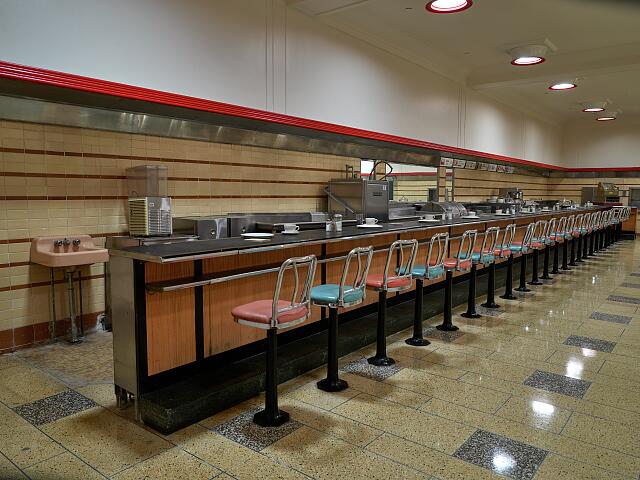
What Was the Greensboro Sit-Ins?
Four Black college students sat at a whites-only Woolworth's lunch counter in Greensboro, North Carolina, launching a wave of nonviolent sit-in protests across the South.
On February 1, 1960, four Black college freshmen did something simple but powerful: they sat down at a lunch counter and asked to be served. Their names were Ezell Blair Jr. (who later changed his name to Jibreel Khazan), David Richmond, Franklin McCain, and Joseph McNeil. They were students at North Carolina Agricultural and Technical State University in Greensboro, North Carolina. The four friends walked into the Woolworth's department store on South Elm Street and sat at the whites-only lunch counter. Black customers could buy things at Woolworth's, but they were not allowed to sit at the lunch counter and eat. When a waitress told them she could not serve them, the four students stayed in their seats. They sat quietly until the store closed for the day. The next morning, they came back — this time with 25 additional students, 29 in total. By the third day, the group had grown to 85. By the fourth day, over 300 students filled the store, including some white students who joined in support. Within two weeks, sit-ins had spread to other cities in North Carolina. Within two months, students in 54 cities across 9 states were holding their own sit-ins at segregated businesses. The movement inspired the founding of the Student Nonviolent Coordinating Committee (SNCC) in April 1960, which became one of the most important civil rights organizations of the decade. The students drew on the nonviolent principles taught by Mahatma Gandhi and Dr. Martin Luther King Jr., refusing to respond to insults or violence with anything but quiet dignity. On July 25, 1960, Woolworth's officially desegregated its lunch counters. The original counter where the four freshmen sat is now preserved at the Smithsonian National Museum of American History in Washington, D.C. Four young men, with nothing but courage and a belief in fairness, started a movement that changed the nation.
Timeline
Watch and Learn
Did You Know?
The Four Students Planned It the Night Before
The night before the sit-in, the four freshmen stayed up late in their dormitory at North Carolina A&T, talking about segregation and deciding to take action. They planned their protest carefully, agreeing to dress neatly, be polite, and remain nonviolent no matter what happened.
They Bought Supplies Before Sitting Down
Before sitting at the lunch counter, the four students first made purchases at other counters in the store. They kept their receipts to make a point: Woolworth's was happy to take their money at every counter except the lunch counter.
The Original Lunch Counter Is in the Smithsonian
A section of the original Woolworth's lunch counter — including the stools where the Greensboro Four sat — is now preserved at the Smithsonian National Museum of American History in Washington, D.C. Visitors can see the actual counter and stools where history was made.
White Students Joined the Protests
By the fourth day of the sit-ins, white students from nearby colleges, including the Women's College of the University of North Carolina (now UNCG), joined the protest. Their participation showed that the movement for fairness crossed racial lines.
The Sit-Ins Led to a Major New Organization
Inspired by the sit-in movement, civil rights leader Ella Baker organized a conference of student activists at Shaw University in Raleigh, North Carolina, in April 1960. This meeting led to the creation of SNCC, which became one of the most important civil rights organizations of the 1960s.
Related Events
Other landmark events connected to this moment in history.
May 4 – December 10, 1961
Freedom Rides
Interracial groups of civil rights activists rode buses into the segregated South to challenge the non-enforcement of Supreme Court desegregation rulings.
August 28, 1963
March on Washington
Over 250,000 people gathered at the Lincoln Memorial, where Martin Luther King Jr. delivered his iconic 'I Have a Dream' speech, demanding civil rights and economic justice.
Want to teach this event? We've done the work for you.
Greensboro Sit-Ins Complete Teaching Bundle
Lesson Plan
Comprehensive lesson plan covering the full event with learning objectives, activities, and assessment.
Student Workbook
Interactive workbook with reading passages, timeline activities, primary source analysis, and a quiz.
Flashcard Set
40 cards covering vocabulary, key facts, people, causes, effects, and review challenges.
Instant digital download · Printable PDF · Grades 4–8 · Verified accurate
Here's a peek inside...
📖 Lesson Plan
📝 Student Workbook
Read the passage about Greensboro Sit-Ins and answer the questions below.
🃏 Flashcard Set - Click to Flip!
Click the card to flip it
Get a Free Sample
Try before you buy! Enter your email to receive a free sampler with flashcards, activities, and a lesson plan excerpt. No spam, just history.