Little Rock Nine
Nine Black students bravely integrated Central High School in Little Rock, Arkansas, facing violent mobs and requiring federal troops for protection.
View Teaching Bundle →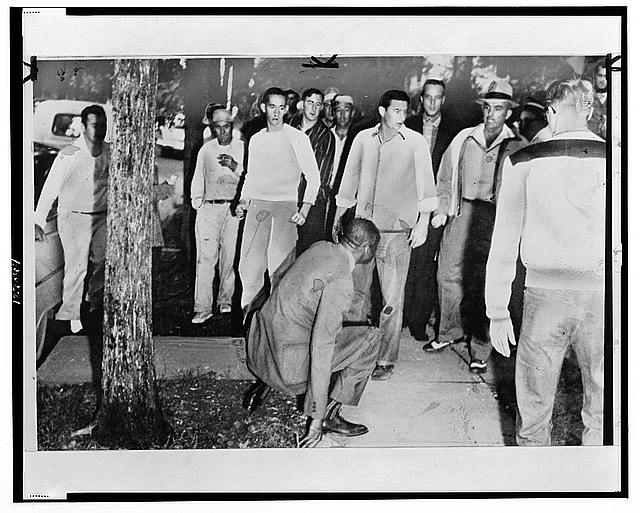
What Was the Little Rock Nine?
Nine Black students bravely integrated Central High School in Little Rock, Arkansas, facing violent mobs and requiring federal troops for protection.
In September 1957, nine Black teenagers walked into Central High School in Little Rock, Arkansas, and changed American history forever. Their names were Minnijean Brown, Elizabeth Eckford, Ernest Green, Thelma Mothershed, Melba Pattillo, Gloria Ray, Terrence Roberts, Jefferson Thomas, and Carlotta Walls. They became known as the Little Rock Nine. Three years earlier, the Supreme Court had ruled in Brown v. Board of Education that segregation in public schools was unconstitutional. But many states refused to follow the ruling. When the Little Rock Nine tried to enter Central High on September 4, 1957, Arkansas Governor Orval Faubus ordered the National Guard to block them. An angry mob gathered outside the school, screaming threats. Elizabeth Eckford, who had not received the message about where the group was meeting, arrived alone and faced the hostile crowd by herself. Photographs of Eckford walking calmly through the screaming mob shocked people around the world. President Dwight D. Eisenhower stepped in. He sent 1,200 soldiers from the U.S. Army's 101st Airborne Division to escort the students safely into the school. It was the first time since Reconstruction that a president had sent federal troops to the South to protect the rights of Black citizens. Inside the school, the Nine faced daily harassment — they were tripped, shoved, called names, and threatened. But they kept going. Daisy Bates, the president of the Arkansas NAACP, mentored and supported them throughout the year. On May 27, 1958, Ernest Green became the first Black student to graduate from Central High School. Dr. Martin Luther King Jr. attended his graduation. In 1999, all nine students were awarded the Congressional Gold Medal, one of the highest honors a civilian can receive. Their bravery proved that young people have the power to stand up for justice, even when the whole world is watching.
Timeline
Watch and Learn
Did You Know?
Elizabeth Eckford Walked Alone Into History
Elizabeth Eckford did not receive the message about where the group was meeting on September 4, 1957. She arrived at Central High School alone and had to face the angry mob by herself, an image that became one of the most powerful photographs of the civil rights movement.
The 101st Airborne Had Fought in World War II
The soldiers President Eisenhower sent to protect the Little Rock Nine were from the famous 101st Airborne Division, known as the 'Screaming Eagles.' These were elite paratroopers who had helped liberate Europe during World War II.
Ernest Green Graduated With Hundreds of White Students
When Ernest Green walked across the stage to receive his diploma on May 27, 1958, he became the first Black graduate of Central High School. He later said that nobody clapped for him, but he did not care — he had made history.
Governor Faubus Closed All High Schools the Next Year
Rather than continue integration, Governor Faubus closed all four public high schools in Little Rock for the entire 1958-1959 school year. This was called the 'Lost Year' because thousands of students — Black and white — could not attend public school.
Daisy Bates Was Their Rock
Daisy Bates, president of the Arkansas NAACP and co-publisher of the Arkansas State Press newspaper, served as a mentor and protector for the Little Rock Nine. The students gathered at her home each morning, and she fought tirelessly for their safety and rights.
Related Events
Other landmark events connected to this moment in history.
May 17, 1954
Brown v. Board of Education
The Supreme Court unanimously ruled that racial segregation in public schools was unconstitutional, overturning the 'separate but equal' doctrine and sparking the modern civil rights movement.
July 2, 1964
Civil Rights Act Signed
President Lyndon B. Johnson signed the Civil Rights Act of 1964 into law, outlawing discrimination based on race, color, religion, sex, or national origin.
Want to teach this event? We've done the work for you.
Little Rock Nine Complete Teaching Bundle
Lesson Plan
Comprehensive lesson plan covering the full event with learning objectives, activities, and assessment.
Student Workbook
Interactive workbook with reading passages, timeline activities, primary source analysis, and a quiz.
Flashcard Set
40 cards covering vocabulary, key facts, people, causes, effects, and review challenges.
Instant digital download · Printable PDF · Grades 4–8 · Verified accurate
Here's a peek inside...
📖 Lesson Plan
📝 Student Workbook
Read the passage about Little Rock Nine and answer the questions below.
🃏 Flashcard Set - Click to Flip!
Click the card to flip it
Get a Free Sample
Try before you buy! Enter your email to receive a free sampler with flashcards, activities, and a lesson plan excerpt. No spam, just history.