Pacemaker Control Unit
Otis Boykin invented an improved electrical resistor and a control unit for the pacemaker, making the life-saving heart device more precise, reliable, and affordable.
View Teaching Bundle →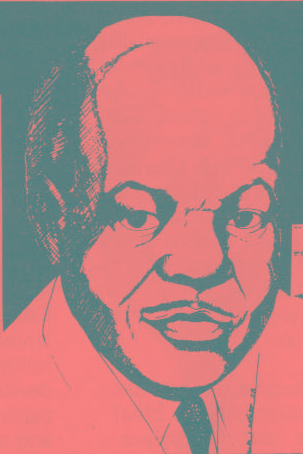
What Is the Pacemaker Control Unit?
Otis Boykin invented an improved electrical resistor and a control unit for the pacemaker, making the life-saving heart device more precise, reliable, and affordable.
Imagine a tiny device inside your chest that keeps your heart beating at exactly the right rhythm — every single second of every day. That device is a pacemaker, and the control unit that makes it work precisely and affordably was invented by Otis Boykin, a brilliant electrical engineer from Dallas, Texas. Before Boykin's breakthrough, pacemakers existed but were expensive, unreliable, and difficult to control. In 1964, Boykin invented an improved electrical control unit that allowed pacemakers to deliver precisely timed electrical pulses to the heart — keeping it beating steadily even when the heart's own electrical system failed. His control unit was more stable, more dependable, and far more affordable than what came before. Boykin's invention didn't happen in isolation. In 1959, he had already created an improved electrical resistor — a component that controls the flow of electricity — that was so stable it became essential in computers and guided missiles. That same genius for precision and reliability went into his pacemaker control unit. Today, more than 3 million pacemakers are implanted worldwide every year, and millions of people benefit because their hearts are kept in rhythm by devices built on precision principles that Otis Boykin helped establish. His story is one of quiet brilliance — a man who held 26 patents and changed medicine forever, whose name deserves to be celebrated alongside the greatest inventors in American history.
Meet the Inventor: Otis Boykin
Otis Boykin was born on August 29, 1920, in Dallas, Texas. He showed an early passion for electronics and went on to study at Fisk University in Nashville, Tennessee, one of the nation's most respected historically Black colleges. After leaving Fisk, he worked for the Majestic Radio and TV Corporation before pursuing graduate-level studies at the Illinois Institute of Technology in Chicago, though financial pressures ultimately prevented him from completing a degree there. Boykin worked for several electronics firms and eventually became an independent inventor and consultant — a career path that required both brilliance and determination, especially for a Black man navigating mid-20th century America. His persistence paid off. In 1959, he received a patent for an improved electrical resistor that maintained exceptional stability across a wide range of temperatures, making it ideal for use in computers and military guided missiles. In 1964, he invented the precision control unit for the cardiac pacemaker — his most celebrated achievement. Over his lifetime, Boykin held 26 patents covering a range of electronic components and devices. In a remarkable historical irony, Otis Boykin — the man who helped make the pacemaker reliable for millions of people — died of heart failure on March 26, 1982, in Paris, France. His legacy endures in every heartbeat steadied by the device he helped perfect.
How It Works
Your heart has its own electrical system — a natural pacemaker called the sinoatrial node that sends tiny electrical signals to tell your heart muscles when to squeeze. When that system malfunctions, the heart can beat too slowly, too fast, or irregularly. A pacemaker is a small device implanted under the skin near the heart. It has two main parts: the pulse generator (with a battery and computer chip) and leads (thin wires) that connect to the heart. Otis Boykin's contribution was the control unit — the precise electronic circuit that monitors the heart's rhythm and sends a correctly timed electrical pulse exactly when the heart needs it. His resistor technology ensured that the circuit stayed stable and accurate regardless of body temperature or other variables. Without precise control, the pacemaker cannot function reliably. Boykin's engineering made that precision possible, and it remains the foundation of modern pacemaker design.
Timeline
Watch and Learn
Did You Know?
Millions of Lives
More than 3 million pacemakers are implanted around the world every year. Every one of them relies on precision control principles that Otis Boykin helped establish with his 1964 invention.
The Resistor Revolution
Boykin's 1959 resistor was so reliable that it was used in IBM computers and U.S. military guided missiles — two of the most demanding technology applications of the era.
A Remarkable Irony
Otis Boykin, the inventor who made the cardiac pacemaker more precise and accessible, died of heart failure in Paris, France, in 1982 — a fact that highlights both his humanity and the importance of his work.
26 Patents
Boykin held 26 patents during his lifetime — an extraordinary achievement for any inventor, and remarkable for a Black man working in mid-20th century America when barriers were high.
Quiet Revolutionary
Unlike some famous inventors, Boykin worked quietly and without fanfare. His name was largely unknown to the public even as his inventions became essential to modern medicine and technology.
STEM Connection
The pacemaker control unit is a perfect example of electrical engineering saving lives. At its core is the resistor — a component Otis Boykin mastered — which controls how much electrical current flows through a circuit. Too much current and the heart gets an unsafe shock; too little and the heart doesn't respond. The control unit must get it exactly right, every time. This involves concepts from multiple STEM fields: physics (how electricity flows through circuits), biology (how the heart's electrical system works), materials science (what materials stay stable at body temperature), and computer science (how to program a device to monitor and respond in real time). Modern pacemakers have evolved into sophisticated computers — some even transmit data wirelessly to doctors. Students interested in biomedical engineering, electrical engineering, or medicine can trace a direct line from their future careers back to the foundational work of Otis Boykin and the resistors he perfected.
Related Inventions
Other Black inventions and innovations that changed the world.
July 10, 1893 · Daniel Hale Williams
Open-Heart Surgery
Dr. Daniel Hale Williams performed one of the first successful open-heart surgeries in history, saving a stabbing victim by repairing the pericardium around his heart.
1988 · Patricia Bath
Cataract Laserphaco Probe
Dr. Patricia Bath invented the Laserphaco Probe for cataract surgery, becoming the first African American woman doctor to receive a medical patent and restoring sight to people worldwide.
Want to teach this invention? We've done the work for you.
Pacemaker Control Unit Complete Teaching Bundle
Lesson Plan
Comprehensive lesson plan covering the invention, the inventor, how it works, and its lasting impact on everyday life.
Student Workbook
Interactive workbook with reading passages, inventor biography, STEM activities, design challenges, and a quiz.
Flashcard Set
40 cards covering vocabulary, key facts, inventor details, how it works, and review challenges.
Instant digital download · Printable PDF · Grades 3–8 · STEM + History
Here's a peek inside...
📖 Lesson Plan
📝 Student Workbook
Read the passage about Otis Boykin and the Pacemaker Control Unit, then answer the questions below.
🃏 Flashcard Set - Click to Flip!
Click the card to flip it
Get a Free Sample
Try before you buy! Enter your email to receive a free sampler with flashcards, activities, and a lesson plan excerpt. No spam, just history.