Black Panther Party
Founded by Huey P. Newton and Bobby Seale in Oakland, California, the Black Panther Party fought for Black liberation through community programs, armed self-defense, and political activism.
View Teaching Bundle →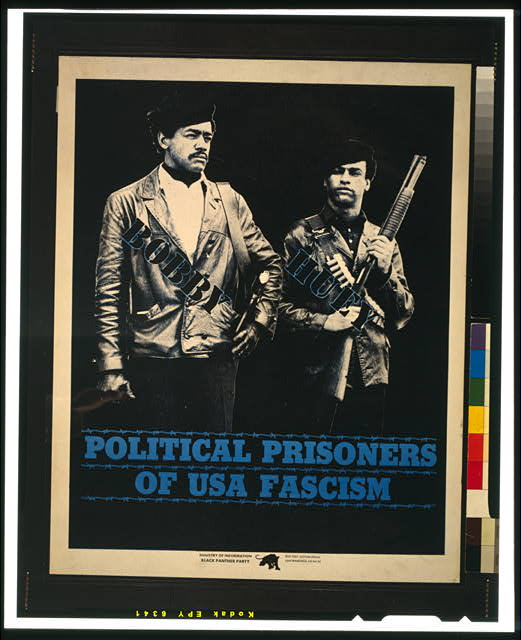
What Was the Black Panther Party?
Founded by Huey P. Newton and Bobby Seale in Oakland, California, the Black Panther Party fought for Black liberation through community programs, armed self-defense, and political activism.
The Black Panther Party (BPP) was an African American political organization founded on October 15, 1966, in Oakland, California, by Huey P. Newton and Bobby Seale. The organization emerged at a time of widespread poverty, police brutality, and limited opportunity in Black urban neighborhoods across the United States. The BPP articulated its goals in a Ten-Point Program that called for full employment, decent housing, quality education, an end to police brutality, and freedom for all Black men held in federal, state, county, and city prisons. Members wore a distinctive uniform of black berets and black leather jackets. At its height, the BPP had chapters in 68 cities across the United States. Among the BPP's most enduring contributions were its community programs, most famously the Free Breakfast for Children Program, which fed approximately 20,000 children per day by 1969 — helping demonstrate to the country the enormous scale of childhood hunger and pushing the federal government to expand and fully fund its own school breakfast program. The organization also operated free health clinics, ambulance services, clothing drives, and legal aid programs in communities with limited access to these resources. The BPP faced intense opposition from law enforcement, including a sustained campaign by the FBI's COINTELPRO program, which FBI Director J. Edgar Hoover called necessary against what he labeled the greatest threat to the internal security of the United States. The combination of government pressure, internal conflicts, and legal battles led to the organization's decline through the 1970s. It officially disbanded in 1982. The BPP's community programs and its vision of Black self-determination have continued to influence social movements and community organizing in the decades since.
Founding Story
In the fall of 1966, two young men at Merritt College in Oakland, California, sat together in a campus office and drafted a document. Huey P. Newton, 24 years old, and Bobby Seale, 29, were frustrated. Oakland was a city where Black residents faced chronic unemployment, substandard housing, and frequent encounters with police that often turned violent. Seale later recalled that they worked through the night, arguing about words and ideas, determined to write something precise. The result was the Ten-Point Program — a clear list of what the Black Panther Party for Self-Defense demanded for Black Americans. Newton and Seale named the organization after the panther because, as they explained it, the panther does not attack first but defends itself fiercely when cornered. They believed Black Americans had the right to defend themselves and their communities. Within months, the BPP had attracted hundreds of members in Oakland and national attention. What began as a small organization between two college students became, within three years, a nationwide movement with chapters in 68 cities, a weekly newspaper with a circulation of 250,000, and community programs feeding tens of thousands of children.
Watch and Learn
Related Organizations
Other organizations and movements connected to this story.
1966–1970s
Black Power Movement
A political movement that emphasized racial pride, self-determination, and the creation of Black political and cultural institutions, shifting the civil rights struggle toward empowerment.
1930–Present
Nation of Islam
A religious and political organization that promoted Black self-reliance, discipline, and pride, most famously led by Elijah Muhammad and championed by Malcolm X.
Want to teach this organization? We've done the work for you.
Black Panther Party Complete Teaching Bundle
Lesson Plan
Comprehensive lesson plan covering the organization's founding, mission, key leaders, and lasting impact.
Student Workbook
Interactive workbook with reading passages, timeline activities, leadership analysis, and a quiz.
Flashcard Set
40 cards covering vocabulary, key facts, leaders, achievements, and review challenges.
Instant digital download · Printable PDF · Grades 4–8 · Verified accurate
Here's a peek inside...
📖 Lesson Plan
📝 Student Workbook
Read the passage about the Black Panther Party and answer the questions below.
Get a Free Sample
Try before you buy! Enter your email to receive a free sampler with flashcards, activities, and a lesson plan excerpt. No spam, just history.