Congress of Racial Equality
A civil rights organization that pioneered the use of nonviolent direct action in America, organizing the Freedom Rides and sit-ins that challenged segregation across the South.
View Teaching Bundle →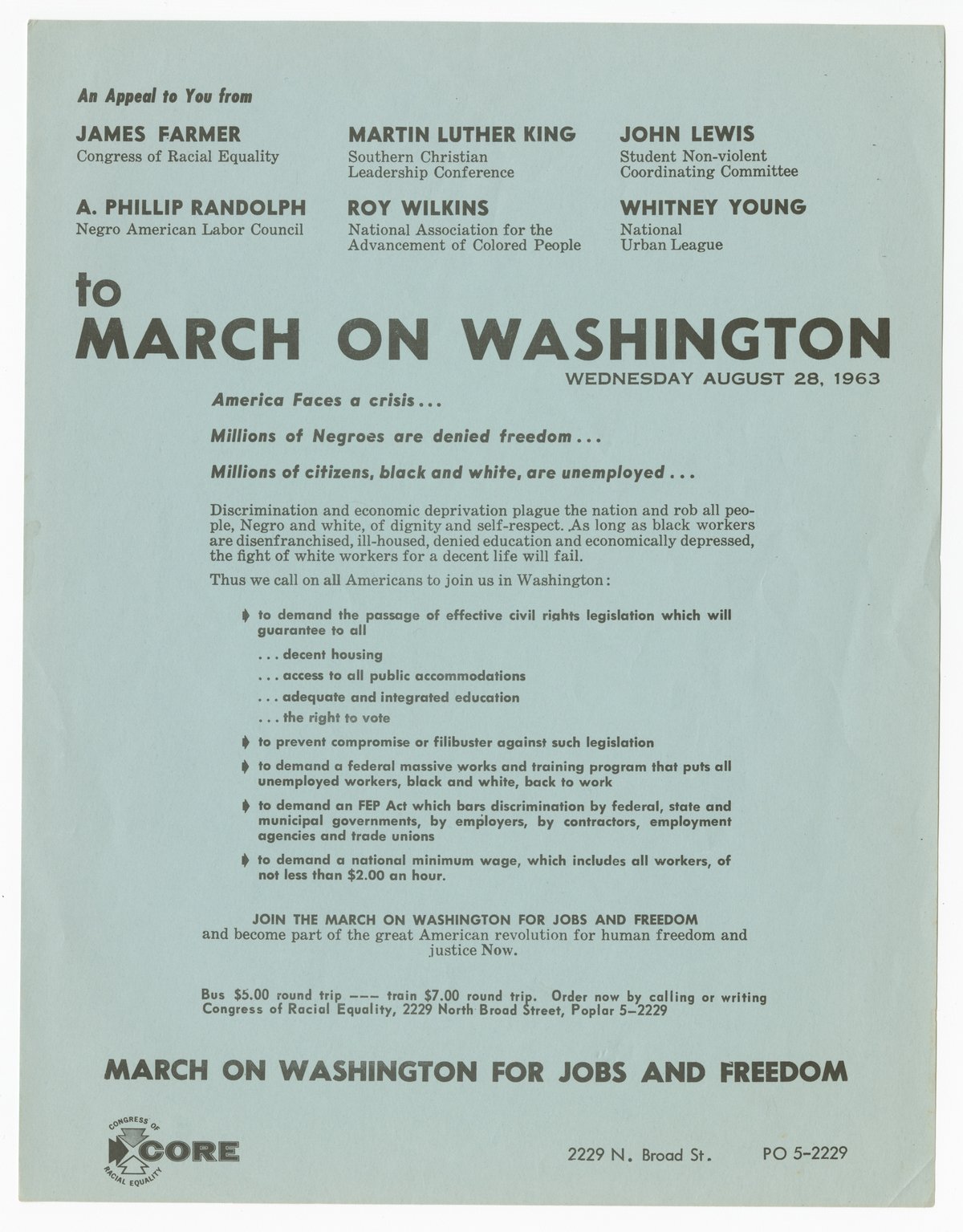
What Was the Congress of Racial Equality?
A civil rights organization that pioneered the use of nonviolent direct action in America, organizing the Freedom Rides and sit-ins that challenged segregation across the South.
The Congress of Racial Equality, founded in 1942, was the first American organization to apply nonviolent direct action tactics — drawn from the teachings of Mahatma Gandhi — to the fight for racial equality in the United States. Established by James Farmer and a small group of students at the University of Chicago, CORE introduced sit-ins, Freedom Rides, and voter registration campaigns that became the defining tactics of the civil rights movement. CORE’s early actions were deliberately targeted and disciplined. Members trained rigorously in nonviolent techniques before entering segregated spaces, refusing to leave when refused service, and remaining peaceful in the face of verbal abuse and physical attack. Their first sit-in, at the Jack Spratt Coffee House in Chicago in 1942, was one of the earliest organized civil rights sit-ins in American history and established a template that activists across the country would follow — nearly two decades before the famous Greensboro sit-ins. The organization’s most dramatic action came in 1961 when CORE organized the Freedom Rides — an interracial group of activists riding interstate buses into the Deep South to challenge segregated bus terminals. The Freedom Riders faced savage violence in Alabama, where mobs attacked buses with fire bombs and beat riders with clubs. The images shocked the nation and pressured the federal government to enforce desegregation of interstate travel facilities. CORE also co-organized the 1963 March on Washington and Freedom Summer in 1964. James Chaney, Andrew Goodman, and Michael Schwerner, three CORE workers, were murdered by Klan members in Mississippi during Freedom Summer — one of the most shocking crimes of the civil rights era.
Founding Story
CORE was founded in the spring of 1942 by James Farmer, Bernice Fisher, George Houser, Homer Jack, James Robinson, and Bayard Rustin — a racially integrated group of students associated with the pacifist organization Fellowship of Reconciliation at the University of Chicago. The founders were inspired by Mahatma Gandhi’s successful use of nonviolent resistance against British colonial rule in India and believed the same approach could be applied to racial segregation in America. James Farmer, a Black minister’s son from Texas with a theology degree from Howard University, became CORE’s first National Director. He had rejected a position with the NAACP because he believed that organization’s litigation strategy was too slow. Farmer and his colleagues wanted direct, immediate confrontation with segregation in daily life — at lunch counters, on buses, in swimming pools — rather than waiting years for courts to act. CORE’s founding philosophy was clear: challenge unjust laws openly, accept the legal consequences, and force the injustice of segregation into public view. The organization’s first sit-in demonstration at a Chicago coffee house in 1942 was small but historic, demonstrating that disciplined nonviolent action could desegregate a business quickly and without legal action.
Major Achievements
Watch and Learn
Did You Know?
CORE's First Sit-In Was 18 Years Before Greensboro
The famous Greensboro sit-ins of 1960 are often credited as the first sit-ins of the civil rights era — but CORE staged one of America's earliest organized civil rights sit-ins at the Jack Spratt Coffee House in Chicago back in 1942, a full 18 years earlier.
The Freedom Riders Kept Going After Their Bus Was Firebombed
When a white mob firebombed a Freedom Ride bus in Anniston, Alabama, in May 1961 and beat the riders as they fled the burning vehicle, another group of riders chose to continue the journey. Their courage forced the federal government to finally enforce desegregation of interstate bus terminals.
Three CORE Workers Were Buried Under an Earthen Dam
After James Chaney, Andrew Goodman, and Michael Schwerner disappeared in Mississippi in June 1964, their bodies were not found for 44 days — hidden beneath an earthen dam. The FBI eventually secured convictions of several men for civil rights violations in connection with the murders.
Gandhi Inspired CORE from Across the Ocean
CORE's founders had never been to India and had never met Gandhi — but they studied his methods carefully and believed nonviolent direct action could work in America. Their faith was proven right: CORE's sit-ins, Freedom Rides, and marches changed the country.
James Farmer Was in Jail When the March Happened
CORE national director James Farmer was in a Louisiana jail on civil rights charges when the March on Washington took place in August 1963. Unable to attend in person, he sent a message that was read aloud at the march to the 250,000 people gathered at the Lincoln Memorial.
Key Events
Landmark events connected to this organization.
May 4 – December 10, 1961
Freedom Rides
Interracial groups of civil rights activists rode buses into the segregated South to challenge the non-enforcement of Supreme Court desegregation rulings.
February 1, 1960
Greensboro Sit-Ins
Four Black college students sat at a whites-only Woolworth's lunch counter in Greensboro, North Carolina, launching a wave of nonviolent sit-in protests across the South.
Related Organizations
Other organizations and movements connected to this story.
1957–Present
Southern Christian Leadership Conference
Led by Martin Luther King Jr., the SCLC coordinated nonviolent protests across the South, including the Birmingham Campaign and the March on Washington.
1960–1970s
Student Nonviolent Coordinating Committee
A youth-led civil rights organization that organized sit-ins, voter registration drives, and Freedom Rides, giving young people a powerful voice in the fight for equality.
Want to teach this organization? We've done the work for you.
Congress of Racial Equality Complete Teaching Bundle
Lesson Plan
Comprehensive lesson plan covering the organization's founding, mission, key leaders, and lasting impact.
Student Workbook
Interactive workbook with reading passages, timeline activities, leadership analysis, and a quiz.
Flashcard Set
40 cards covering vocabulary, key facts, leaders, achievements, and review challenges.
Instant digital download · Printable PDF · Grades 4–8 · Verified accurate
Here's a peek inside...
📖 Lesson Plan
📝 Student Workbook
Read the passage about the Congress of Racial Equality and answer the questions below.
🃏 Flashcard Set - Click to Flip!
Click the card to flip it
Get a Free Sample
Try before you buy! Enter your email to receive a free sampler with flashcards, activities, and a lesson plan excerpt. No spam, just history.