The Souls of Black Folk
By W.E.B. Du Bois
W.E.B. Du Bois's groundbreaking collection of essays exploring the experience of being Black in America, introducing the concept of 'double consciousness' and challenging Booker T. Washington's approach.
View Teaching Bundle →
What Is the The Souls of Black Folk?
W.E.B. Du Bois's groundbreaking collection of essays exploring the experience of being Black in America, introducing the concept of 'double consciousness' and challenging Booker T. Washington's approach.
Published on April 18, 1903, The Souls of Black Folk by W.E.B. Du Bois is one of the most important books ever written in American history. A collection of 14 essays, it captured something that had never been put into words quite so powerfully before: what it feels like to be Black in America — to live in a country that sees you as a problem rather than a person. Du Bois introduced two ideas that changed how people think about race and identity. The first is 'double consciousness' — the feeling of always seeing yourself through the eyes of others, of measuring your own worth by how a world that doubts you sees you. The second is 'the Veil' — his image of the invisible but real barrier separating Black and white America, the color line that shaped every aspect of life. The book also launched a historic intellectual debate. Booker T. Washington, the most prominent Black leader of the time, argued that Black Americans should focus on economic self-improvement and accept a limited social role — at least for now. Du Bois disagreed. He argued that Black Americans deserved full political rights, higher education, and the dignity of equality — not compromise. The Souls of Black Folk sold out immediately and went through 24 printings in Du Bois's lifetime. It helped inspire the founding of the NAACP in 1909 and shaped the Harlem Renaissance. More than 120 years later, Du Bois's words still resonate — his questions about identity, equality, and what it means to be fully seen as a human being remain as relevant as ever.
Historical Context
W.E.B. Du Bois published The Souls of Black Folk in 1903, nearly 40 years after the end of the Civil War. The promise of Reconstruction — voting rights, citizenship, political power — had been largely dismantled. Jim Crow laws enforced racial segregation across the South. Lynching was a constant threat. Black Americans were legally free but denied full participation in American life. In this climate, Booker T. Washington had become the dominant Black voice by promoting economic self-reliance and political accommodation. His 1895 'Atlanta Compromise' speech suggested Black Americans should focus on vocational skills and accept segregation for the time being. Many white Americans and white-controlled institutions supported Washington because his approach didn't threaten the existing racial order. Du Bois challenged this framework directly. A scholar and the first African American to earn a PhD from Harvard (1895), he insisted that political rights and higher education were not luxuries — they were necessities. Notably, most of the essays that make up The Souls of Black Folk had been published earlier in The Atlantic Monthly between 1897 and 1902, reaching a national audience before Du Bois gathered them into a single, powerful book. The Souls of Black Folk was his most powerful argument for full Black humanity and equality.
Key Excerpts
Important passages from this primary source, presented in kid-friendly language.
"One ever feels his two-ness — an American, a Negro; two souls, two thoughts, two unreconciled strivings; two warring ideals in one dark body, whose dogged strength alone keeps it from being torn asunder."
What this means: Du Bois describes double consciousness — the exhausting feeling of being two things at once. Black Americans were both American and Black in a country that treated those identities as a contradiction. This internal tension is what he called double consciousness.
"The problem of the Twentieth Century is the problem of the color-line."
What this means: This line from the Forethought — the book's preface — predicted that race — who is included and who is excluded based on skin color — would be the defining challenge of the 1900s. Du Bois was right: nearly every major event of the 20th century touched on this question.
"After the Egyptian and Indian, the Greek and Roman, the Teuton and Mongolian, the Negro is a sort of seventh son, born with a veil, and gifted with second-sight in this American world — a world which yields him no true self-consciousness, but only lets him see himself through the revelation of the other world."
What this means: Du Bois uses the image of a 'veil' — an invisible barrier that separates Black Americans from full participation in society. But he also says this outsider perspective gives Black Americans a special insight into America that others cannot see.
"The history of the American Negro is the history of this strife — this longing to attain self-conscious manhood, to merge his double self into a better and truer self."
What this means: Du Bois says Black American history is the story of people striving to be seen as full human beings — not as a 'problem' to be managed, but as people with dreams, talents, and the right to be whole.
Vocabulary Spotlight
Key words and phrases from this primary source.
Double consciousness
Du Bois's term for the feeling of having two identities that don't fit together — being both Black and American in a country that treats those as opposites.
The Veil
Du Bois's image of the invisible barrier — the color line — that separates Black America from white America and limits what Black people can see and achieve.
The color-line
The division between Black and white in American society — enforced by law, custom, and violence. Du Bois called it 'the problem of the Twentieth Century.'
Self-consciousness
Awareness of oneself — how you see yourself. Du Bois wrote about the struggle for Black Americans to define themselves rather than being defined by others.
Striving
Working hard toward a goal, especially against great obstacles. Du Bois used this word to describe the constant effort required of Black Americans to be recognized as full human beings.
Atlanta Compromise
Booker T. Washington's 1895 proposal that Black Americans accept limited social rights in exchange for economic opportunities — a position Du Bois strongly opposed.
Talented Tenth
Du Bois's idea that the top 10% of Black Americans — those with higher education — should lead the fight for civil rights and lift up the whole community. Note: While the concept of educated Black leadership is present throughout Souls of Black Folk, the specific essay titled 'The Talented Tenth' was published separately in the 1903 anthology The Negro Problem, not in Souls of Black Folk itself.
Reconstruction
The period from 1865 to 1877 when the U.S. tried to rebuild after the Civil War and protect the rights of formerly enslaved people — a promise that was broken.
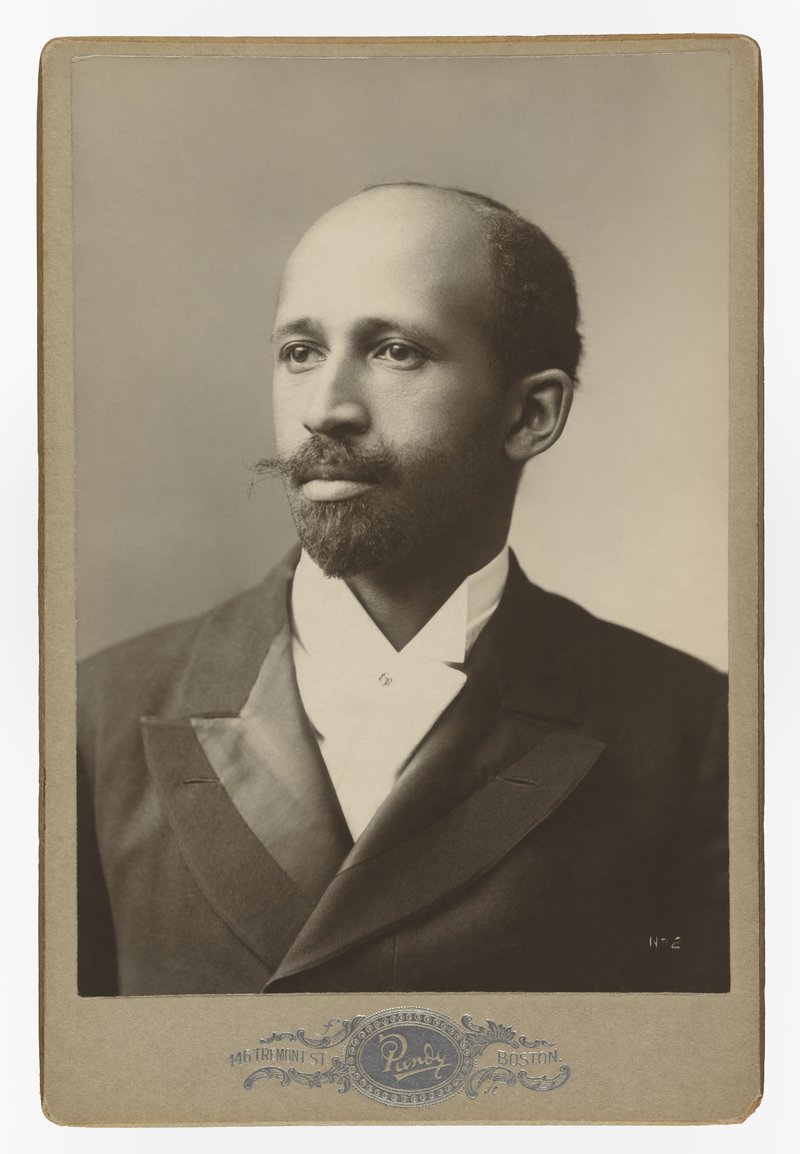
About the Author
Learn more about the person who created this primary source.
Impact & Legacy
Watch and Learn
Did You Know?
It Sold Out Immediately
The Souls of Black Folk sold out its first printing almost immediately after publication on April 18, 1903, and went through 24 printings during Du Bois's lifetime — a remarkable achievement for any book in that era.
Du Bois Was the First
W.E.B. Du Bois was the first African American to earn a PhD from Harvard University, in 1895. He was a pioneer in both scholarship and activism.
He Died the Day Before 'I Have a Dream'
Du Bois died on August 27, 1963 — one day before Martin Luther King Jr. delivered his 'I Have a Dream' speech at the March on Washington. The torch was passed across time.
A Challenge to the Most Powerful Black Voice
When The Souls of Black Folk was published, Booker T. Washington was the most influential Black leader in America. Du Bois's book directly challenged Washington's ideas — a bold and courageous act.
Born Just After the Civil War
Du Bois was born in 1868 — just three years after the Civil War ended. He lived through Reconstruction, Jim Crow, two World Wars, and the early civil rights movement. He was 95 when he died.
Double Consciousness Is Still Studied
More than 120 years after Du Bois coined the term 'double consciousness,' it is still taught in universities worldwide as one of the most powerful concepts for understanding race and identity.
Related Events
Landmark events connected to this primary source.
Related Primary Sources
Other important documents and speeches in Black history.
Want to teach this primary source? We've done the work for you.
The Souls of Black Folk Complete Teaching Bundle
Lesson Plan
Comprehensive lesson plan covering the document's background, key passages, author's purpose, and historical impact.
Student Workbook
Interactive workbook with source analysis exercises, reading comprehension, vocabulary in context, and compare & contrast activities.
Flashcard Set
40 cards covering vocabulary, key excerpts, historical context, author's purpose, and review challenges.
Instant digital download · Printable PDF · Grades 4–8 · Verified accurate
Here's a peek inside...
📖 Lesson Plan
📝 Student Workbook
Read the excerpt from The Souls of Black Folk and answer the questions below.
🃏 Flashcard Set - Click to Flip!
Click the card to flip it
Get a Free Sample
Try before you buy! Enter your email to receive a free sampler with flashcards, activities, and a lesson plan excerpt. No spam, just history.