"The Ballot or the Bullet" Speech
By Malcolm X
Malcolm X's landmark speech urging Black Americans to exercise their voting power and take control of their communities, advocating for self-defense and political independence.
View Teaching Bundle →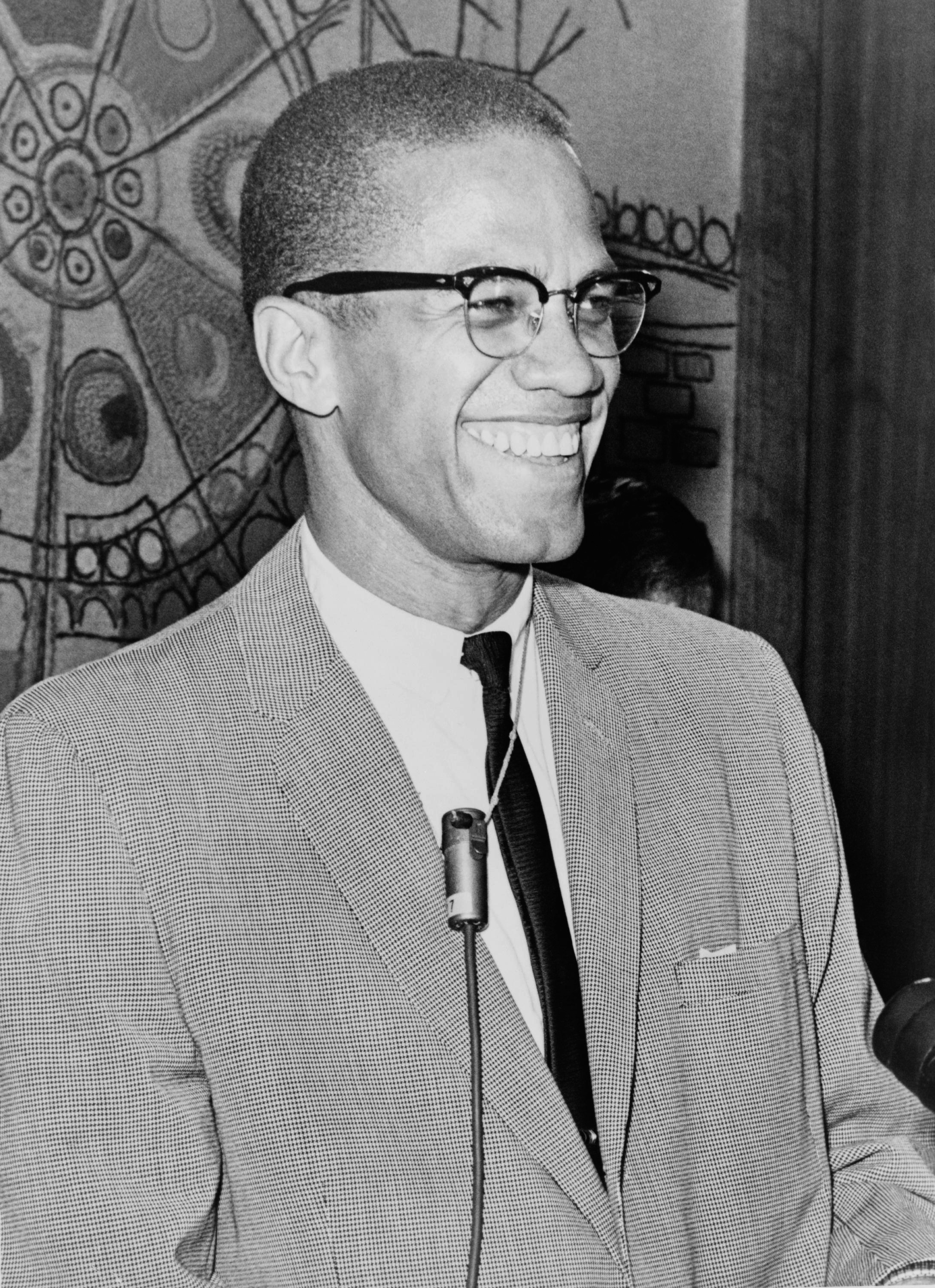
What Is the "The Ballot or the Bullet" Speech?
Malcolm X's landmark speech urging Black Americans to exercise their voting power and take control of their communities, advocating for self-defense and political independence.
On April 3, 1964, Malcolm X stood before an audience at Cory Methodist Church in Cleveland, Ohio, and delivered one of the most powerful speeches in American history. Known as 'The Ballot or the Bullet,' it is considered alongside Martin Luther King Jr.'s 'I Have a Dream' — delivered just seven months earlier — as one of the defining speeches of the civil rights era. It is a masterpiece of political persuasion, logic, and passion. The speech's central message was about political power. Malcolm X argued that Black Americans had enormous, untapped voting power — and that they had not been using it strategically. He pointed out that Black voters had helped elect presidents and members of Congress, yet their communities still suffered from poverty, unemployment, inadequate schools, and unequal treatment before the law. His message: vote with purpose, demand results, and hold elected officials accountable. The title captures the speech's urgent logic: Black Americans should use their democratic power — the ballot — to achieve the equal rights and dignity they deserved. If democracy continued to fail to protect Black citizens despite their participation and loyalty, Malcolm X argued they retained the human right to defend themselves. This framing must be understood in its context: civil rights workers across the South had been murdered, bombed, beaten, and jailed with little federal protection. Self-defense was a recognized legal and moral concept. The speech was ultimately a powerful call to political action. What makes 'The Ballot or the Bullet' enduringly important is what it shares with the broader civil rights movement's goals, even as it reflects a different approach. Malcolm X and Martin Luther King Jr. both demanded full equality, dignity, and justice for Black Americans. They disagreed sharply on strategy — but studying both voices gives us a fuller, richer picture of this pivotal moment in history. Understanding Malcolm X's speech is essential for any serious study of the civil rights era.
Historical Context
When Malcolm X delivered this speech in April 1964, the United States was in the middle of a political and social crisis over civil rights. The Civil Rights Act had not yet been signed — that would happen in July 1964. Black Americans across the South were still living under Jim Crow laws that legally enforced segregation and inequality. Civil rights workers faced daily violence: bombings, beatings, and murders carried out with little accountability. The 16th Street Baptist Church bombing in Birmingham, Alabama had killed four young girls just seven months earlier, in September 1963. Medgar Evers, the NAACP leader in Mississippi, had been assassinated in his driveway in June 1963. Malcolm X himself was at a turning point in his life. He had spent over a decade as one of the most prominent leaders of the Nation of Islam and as a spokesman for Minister Elijah Muhammad. In March 1964 — just weeks before this speech — he publicly broke from the Nation of Islam. This separation was partly personal and partly philosophical. Malcolm X was increasingly drawn toward broader political engagement and what he called 'human rights' rather than just civil rights. His views were evolving rapidly. Just weeks after this speech, he would make a pilgrimage to Mecca that profoundly deepened his understanding of race and religion. The political context of 1964 was also crucial. It was a presidential election year. Lyndon B. Johnson was running for election in his own right (he had become president after Kennedy's assassination in November 1963). The question of what Black political power could achieve — and whether the Democratic Party could be trusted to deliver — was intensely debated. Malcolm X's speech addressed this directly, arguing that Black voters had consistently voted for politicians who promised change but did not deliver it. He called for strategic, deliberate, independent political power rather than blind loyalty to any party.
Key Excerpts
Important passages from this primary source, presented in kid-friendly language.
"I'm not here to argue or discuss anything that we differ about, because it's time for us to submerge our differences and realize that it is best for us to first see that we have the same problem, a common problem — a problem that will make you catch hell whether you're a Baptist, or a Methodist, or a Muslim, or a nationalist."
What this means: Malcolm X opens by calling for unity across religious and ideological differences. He is speaking to a mixed audience and acknowledges that Black Americans held different beliefs — but argues that those differences should be set aside because they share the same experience of discrimination. This is a unifying, coalition-building message.
"It was the Black vote that put the present administration in Washington, D.C. Your vote, your dumb vote, your ignorant vote, your wasted vote put in an administration in Washington, D.C. that has seen fit to pass every kind of legislation imaginable, saving you until last..."
What this means: Malcolm X is making an argument about political leverage and accountability. He is saying that Black voters have given their votes to political leaders who have not prioritized their needs in return. His provocative language is designed to challenge listeners out of complacency and demand that they vote strategically rather than out of habit or loyalty.
"The ballot or the bullet. If you're afraid to use an expression like that, you should get out of the country, you should get back in the cotton field."
What this means: This is the speech's defining phrase. Malcolm X is arguing that Black Americans face a stark choice: use their political power through voting, or — if they continue to be denied their constitutional rights — accept that the situation will require other forms of resistance. The phrase is provocative by design, meant to shock listeners into political urgency.
"Any time you throw your weight behind a political party that controls two-thirds of the government, and that party can't keep the promise that it made to you during election time, and you're dumb enough to walk around continuing to identify yourself with that party — you're not only a chump, but you're a traitor to your race."
What this means: Malcolm X is making an argument about accountability in democracy. He argues that if a political party holds power and still fails to pass legislation that protects Black Americans, continuing to loyally support that party without demanding results is politically self-defeating. This is a call for strategic, independent political thinking rather than party loyalty.
"I myself would go for nonviolence if it was consistent, if everybody was going to be nonviolent all the time. I'd say, okay, let's get with it, we'll all be nonviolent. But I don't go along — I'm not going to sit around and let somebody whip my head and call me telling me to be nonviolent."
What this means: This passage reflects the context of the speech: civil rights workers were being beaten and killed with no protection from law enforcement. Malcolm X is articulating the concept of self-defense — recognized in American law — in response to documented violence against peaceful activists. He is not calling for aggression; he is asserting the right not to be victimized without response.
Vocabulary Spotlight
Key words and phrases from this primary source.
Political Sovereignty
The power of a group of people to govern themselves and make their own political decisions
Nationalism
A political belief that a group of people with a shared identity should have self-determination — the power to control their own fate
Self-Determination
The right of a group of people to decide their own political status and how they are governed
Rhetoric
The art of using language effectively and persuasively to communicate an argument or move an audience
Accountability
The responsibility to explain and justify one's actions; being held responsible for promises made
Human Rights
The basic rights and freedoms that belong to every person, regardless of nationality, race, or religion — a broader concept than civil rights, which apply within one country
Economic Empowerment
Building financial independence, wealth, and economic control for a community
Nation of Islam
A Black religious and political organization founded in 1930 in the United States, which combined elements of Islam with a philosophy of Black self-reliance and separatism. Malcolm X was a prominent member and national spokesman until his break from the organization in March 1964.
Impact & Legacy
Watch and Learn
Did You Know?
Two Great Speeches, One Pivotal Year
Martin Luther King Jr. delivered 'I Have a Dream' at the March on Washington on August 28, 1963. Malcolm X delivered 'The Ballot or the Bullet' on April 3, 1964 — just seven months later. These two speeches are often studied together because they represent two different but deeply important voices in the same civil rights moment: both demanding equality and dignity for Black Americans, each offering a different vision of how to get there.
Malcolm X and MLK Actually Met — Once
Malcolm X and Martin Luther King Jr. met in person exactly once, on March 26, 1964 — just days before 'The Ballot or the Bullet' was delivered — when both happened to be in Washington, D.C. to observe the Senate debate on the Civil Rights Act. They shook hands and posed for a photograph. It is the only photograph of the two men together. Neither would live to see the 1970s.
An Evolving Thinker
Many people know Malcolm X primarily from his earlier, more separatist statements. But 'The Ballot or the Bullet' — and especially his writings and speeches after his pilgrimage to Mecca — show a thinker who was changing rapidly. Malcolm X said his trip to Mecca showed him that people of all races could be brothers. He was moving toward a broader human rights framework when he was assassinated at age 39.
One of America's Greatest Speeches
Scholars and communication experts consistently rank 'The Ballot or the Bullet' among the greatest American speeches ever delivered. A 1999 survey by communication scholars at the University of Wisconsin ranked it as one of the top speeches of the 20th century. It is studied in college rhetoric courses alongside Lincoln's Gettysburg Address and King's 'I Have a Dream.'
The Autobiography of Malcolm X
Shortly before his assassination, Malcolm X worked with writer Alex Haley on his autobiography. Published in 1965, The Autobiography of Malcolm X tells his full life story — from his childhood, through his years in the Nation of Islam, to his pilgrimage to Mecca and evolving political vision. It has sold millions of copies and is considered one of the most important nonfiction books of the 20th century.
Related Primary Sources
Other important documents and speeches in Black history.
August 28, 1963 · Speech
"I Have a Dream" Speech
Martin Luther King Jr.'s iconic speech delivered to over 250,000 people at the March on Washington, calling for racial equality and an end to discrimination in one of history's greatest orations.
April 16, 1963 · Letter
Letter from Birmingham Jail
Martin Luther King Jr.'s eloquent letter written from a jail cell in Birmingham, Alabama, defending nonviolent resistance and arguing that injustice anywhere is a threat to justice everywhere.
Want to teach this primary source? We've done the work for you.
"The Ballot or the Bullet" Speech Complete Teaching Bundle
Lesson Plan
Comprehensive lesson plan covering the document's background, key passages, author's purpose, and historical impact.
Student Workbook
Interactive workbook with source analysis exercises, reading comprehension, vocabulary in context, and compare & contrast activities.
Flashcard Set
40 cards covering vocabulary, key excerpts, historical context, author's purpose, and review challenges.
Instant digital download · Printable PDF · Grades 4–8 · Verified accurate
Here's a peek inside...
📖 Lesson Plan
📝 Student Workbook
Read the excerpt from "The Ballot or the Bullet" Speech and answer the questions below.
🃏 Flashcard Set - Click to Flip!
Click the card to flip it
Get a Free Sample
Try before you buy! Enter your email to receive a free sampler with flashcards, activities, and a lesson plan excerpt. No spam, just history.