Letter from Birmingham Jail
By Martin Luther King Jr.
Martin Luther King Jr.'s eloquent letter written from a jail cell in Birmingham, Alabama, defending nonviolent resistance and arguing that injustice anywhere is a threat to justice everywhere.
View Teaching Bundle →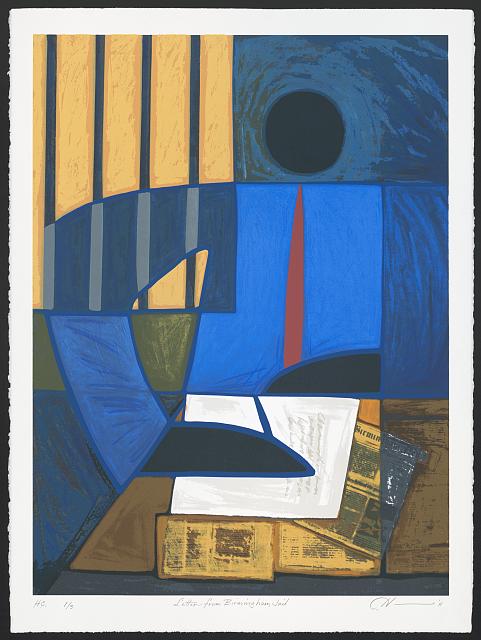
What Is the Letter from Birmingham Jail?
Martin Luther King Jr.'s eloquent letter written from a jail cell in Birmingham, Alabama, defending nonviolent resistance and arguing that injustice anywhere is a threat to justice everywhere.
On April 16, 1963, Martin Luther King Jr. sat in a Birmingham, Alabama jail cell and wrote one of the most powerful documents in American history. He had been arrested for participating in peaceful civil rights marches — marches that local authorities had declared illegal. With no writing paper, King started writing in the margins of a newspaper, then on scraps of paper his lawyers smuggled in. King was responding to a public statement written by eight white Alabama clergymen — ministers and rabbis — who called the civil rights demonstrations 'unwise and untimely.' They urged patience. They agreed with King's goals, they said, but argued that the streets were not the right place to demand change. King's Letter from Birmingham Jail was his answer. In roughly 7,000 words, he addressed their specific arguments one by one. He explained why he could not wait. He drew the crucial distinction between just laws and unjust laws. He defended the strategy of nonviolent direct action. And he offered his most stinging critique — not of outright racists, but of the 'white moderate' who preferred order to justice. The letter was not immediately famous. King wrote it for those eight clergymen. But it was soon reprinted in magazines and distributed widely, and over time it became recognized as one of the greatest essays in American history — a masterpiece of moral argument, legal reasoning, and personal witness. For students today, it teaches not just history but how to think: how to build an argument, how to respond to critics, and what it means to stand up for justice even when it is costly.
Historical Context
Birmingham, Alabama in 1963 was one of the most segregated cities in America. The city's public safety commissioner, Bull Connor, enforced segregation with ferocity. The Southern Christian Leadership Conference (SCLC) and King chose Birmingham deliberately because it was so resistant — if the movement could win there, it could win anywhere. The Birmingham Campaign (Project C — for Confrontation) began in April 1963. Protesters sat in at segregated lunch counters, marched through downtown, and deliberately filled the jails to create a crisis. When children joined the marches, Bull Connor responded with fire hoses and police dogs. The images shocked the nation and the world. King was arrested on Good Friday, April 12, 1963. While he sat in jail, the eight clergymen published 'A Call for Unity' in Birmingham's newspapers, calling the protests 'unwise and untimely.' King read it in his cell and began writing his response immediately — one of the most remarkable acts of writing under pressure in American history.
Key Excerpts
Important passages from this primary source, presented in kid-friendly language.
"Injustice anywhere is a threat to justice everywhere. We are caught in an inescapable network of mutuality, tied in a single garment of destiny. Whatever affects one directly, affects all indirectly."
What this means: King argues that justice is not local — it belongs to everyone. When one person or group is treated unjustly, it weakens justice for all. This idea — that we are all connected — is the foundation of his argument for why he had a right and a duty to march in Birmingham.
"We know through painful experience that freedom is never voluntarily given by the oppressor; it must be demanded by the oppressed."
What this means: King is directly responding to those who told him to be patient. He argues that history shows no evidence of oppressors simply giving up power on their own. Freedom must be actively demanded — which is exactly what the marches were doing.
"One has not only a legal but a moral responsibility to obey just laws. Conversely, one has a moral responsibility to disobey unjust laws."
What this means: King makes one of the most powerful arguments in the letter: not all laws are just, and unjust laws have no moral authority. He drew on St. Augustine, St. Thomas Aquinas, and other philosophers to support this distinction.
"I must confess that over the past few years I have been gravely disappointed with the white moderate. I have almost reached the regrettable conclusion that the Negro's great stumbling block in his stride toward freedom is not the White Citizen's Counciler or the Ku Klux Klanner, but the white moderate, who is more devoted to 'order' than to justice."
What this means: King's most unexpected argument — he says the biggest obstacle to civil rights is not violent racists but people who agree with his goals but oppose his methods. Preferring order to justice means choosing the comfort of the powerful over the rights of the oppressed.
Vocabulary Spotlight
Key words and phrases from this primary source.
Just law / Unjust law
A just law is one that is fair and treats all people equally. An unjust law violates human dignity. King argued people have a moral duty to obey just laws and disobey unjust ones.
Nonviolent direct action
A method of protest that uses peaceful demonstrations — marches, sit-ins, boycotts — to create a visible crisis that forces the powerful to negotiate.
Civil disobedience
Deliberately breaking a law you believe is unjust, while accepting the legal consequences, to highlight the injustice and pressure for change.
Tension (creative tension)
King's term for the uncomfortable conflict that nonviolent protest creates — forcing people who prefer to ignore injustice to confront it.
Moderate
Someone who holds middle-ground views and generally prefers gradual change and avoiding conflict. King criticized the 'white moderate' for preferring order to justice.
Oppressor / Oppressed
The oppressor holds power and uses it unfairly. The oppressed are those denied rights and dignity by that power. King drew on this distinction throughout the letter.
Untimely
The clergymen called the protests 'unwise and untimely' — meaning this was not the right time to march. King's entire letter is a response to this claim.
Network of mutuality
King's phrase for the idea that all people are connected — what happens to one person affects others. This concept underlies his argument that injustice anywhere is everyone's concern.
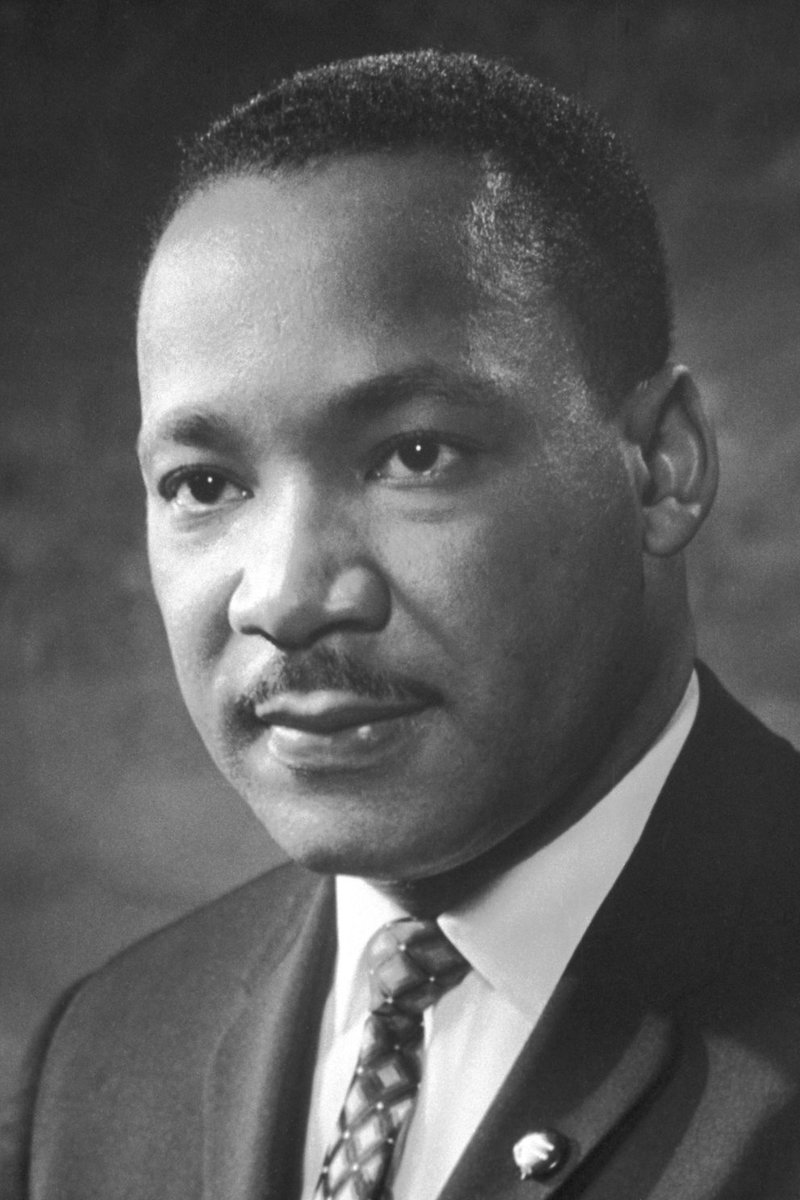
About the Author
Learn more about the person who created this primary source.
Impact & Legacy
Watch and Learn
Did You Know?
Written in the Margins of a Newspaper
King had no writing paper in jail. He started writing the letter in the margins of the newspaper where the clergymen's statement was published, then continued on scraps of paper brought in by his lawyers and SCLC staff.
7,000 Words Written in Jail
The Letter from Birmingham Jail is approximately 7,000 words — the length of a short book. King wrote it largely from memory, drawing on philosophers, theologians, and historical examples he carried in his mind.
Eight Clergymen as Audience
King addressed the letter to eight specific men: Bishop C.C.J. Carpenter, Bishop Joseph A. Durick, Rabbi Milton L. Grafman, Bishop Paul Hardin, Bishop Nolan B. Harmon, Rev. George M. Murray, Rev. Edward V. Ramage, and Rev. Earl Stallings.
He Drew on St. Augustine and Aquinas
To explain just and unjust laws, King cited St. Augustine ('an unjust law is no law at all') and St. Thomas Aquinas — showing that the moral case for civil disobedience had deep roots in Western philosophy.
Arrested on Good Friday, Letter Dated April 16
King was arrested on Good Friday, April 12, 1963 — the Christian holy day commemorating Jesus's crucifixion. He began writing his response that same day in the newspaper's margins. He completed and dated the letter April 16, 1963. The timing of his arrest was meaningful to King, who saw the civil rights struggle in spiritual terms.
A Private Letter That Became Public
King wrote the letter to specific clergymen, not expecting it to be widely published. It became one of the most read and studied documents in American history — a reminder that writing for a real audience can produce the most powerful work.
Related Events
Landmark events connected to this primary source.
August 28, 1963
March on Washington
Over 250,000 people gathered at the Lincoln Memorial, where Martin Luther King Jr. delivered his iconic 'I Have a Dream' speech, demanding civil rights and economic justice.
July 2, 1964
Civil Rights Act Signed
President Lyndon B. Johnson signed the Civil Rights Act of 1964 into law, outlawing discrimination based on race, color, religion, sex, or national origin.
Related Primary Sources
Other important documents and speeches in Black history.
Want to teach this primary source? We've done the work for you.
Letter from Birmingham Jail Complete Teaching Bundle
Lesson Plan
Comprehensive lesson plan covering the document's background, key passages, author's purpose, and historical impact.
Student Workbook
Interactive workbook with source analysis exercises, reading comprehension, vocabulary in context, and compare & contrast activities.
Flashcard Set
40 cards covering vocabulary, key excerpts, historical context, author's purpose, and review challenges.
Instant digital download · Printable PDF · Grades 4–8 · Verified accurate
Here's a peek inside...
📖 Lesson Plan
📝 Student Workbook
Read the excerpt from Letter from Birmingham Jail and answer the questions below.
🃏 Flashcard Set - Click to Flip!
Click the card to flip it
Get a Free Sample
Try before you buy! Enter your email to receive a free sampler with flashcards, activities, and a lesson plan excerpt. No spam, just history.